Why Choose Copper Plate for Your Next Project and Its Benefits
In recent years, the usage of Copper Plate has gained significant attention in various industries due to its remarkable versatility and inherent benefits. Experts like Dr. Emily Carter, a renowned materials scientist, emphasize the importance of this material in modern engineering projects, stating, "Choosing Copper Plate not only enhances the durability of your product but also offers superior conductivity and aesthetic appeal." These qualities make Copper Plate an ideal choice for everything from electrical components to architectural designs.
One of the prominent advantages of Copper Plate is its exceptional thermal and electrical conductivity, which is crucial in applications requiring efficient energy transfer. As industries continue to evolve towards smarter technology solutions, the role of Copper Plate has become increasingly vital. Its resistance to corrosion and long lifespan further underscores why many professionals are favoring this material in their projects.
Moreover, the aesthetic qualities of Copper Plate cannot be overlooked. Its natural patina and warm tone provide an eye-catching appeal, making it a popular choice among designers and architects looking to incorporate elements that blend functionality with artistry. As the industry shifts toward sustainable practices, the recyclability of Copper Plate also adds to its attractiveness, positioning it as a forward-thinking material for contemporary projects.

Benefits of Using Copper Plate in Construction and Design
Copper plates have gained popularity in construction and design due to their unique properties and aesthetic appeal. One of the most significant benefits of using copper plates is their natural resistance to corrosion and weathering. According to a report by the Copper Development Association, buildings that incorporate copper components not only enhance their longevity but also reduce maintenance costs over time. Structures with copper roofing or cladding can last over 100 years, showcasing the material's durability and sustainability.
Moreover, copper boasts excellent thermal conductivity, making it an ideal choice for energy-efficient construction. A study published in the Journal of Construction and Building Materials highlights that using copper in building systems can lead to improved overall energy performance by minimizing heat loss and ensuring better temperature regulation. This property is particularly beneficial in regions with extreme climate variations, where temperature control is critical for energy savings and occupant comfort. Additionally, copper's antimicrobial properties contribute to healthier indoor environments, making it an attractive choice for healthcare facilities and public spaces where hygiene is paramount.
Why Choose Copper Plate for Your Next Project and Its Benefits - Benefits of Using Copper Plate in Construction and Design
| Benefit |
Description |
Application |
| Durability |
Copper is highly resistant to corrosion and can last for decades with minimal maintenance. |
Roofing, plumbing |
| Aesthetic Appeal |
Copper has a unique and elegant look that enhances the visual quality of any design. |
Architectural details, sculptures |
| Thermal Conductivity |
Excellent conductor of heat, making it ideal for efficient heating and cooling systems. |
HVAC systems, heat exchangers |
| Antimicrobial Properties |
Copper has the ability to kill bacteria and other pathogens, promoting a healthier environment. |
Hospitals, kitchens |
| Ease of Fabrication |
Can be easily shaped and joined, permitting intricate designs in various applications. |
Artistic works, customized fixtures |
Durability and Longevity: Why Copper Plate Stands Out
Copper plate has emerged as a leading material choice in various industries due to its outstanding durability and longevity. According to a report from the International Copper Association, copper boasts a natural resistance to corrosion, which significantly enhances its lifespan compared to other materials. In environments prone to moisture and corrosion, such as marine settings or areas with high humidity, copper plate can last over 50 years without requiring significant maintenance, thus representing a cost-effective solution over time.
Moreover, copper is less prone to deformation and wear, making it an ideal choice for applications that demand robustness. A study published in the Journal of Material Science highlighted that copper's tensile strength and ductility allow it to withstand heavy loads without risking structural failure. This durability is particularly beneficial in architectural applications and industrial designs, where both aesthetics and functionality are crucial. The use of copper plate not only ensures a long-lasting infrastructure but also adds value with its appealing visual characteristics, making it a distinctive option for architects and builders alike.
Aesthetic Appeal: The Visual Advantages of Copper Plate
Copper plate offers a unique aesthetic appeal that can significantly enhance the visual impact of various projects. Its rich, warm hues range from deep reddish-brown to bright, lustrous tones, which can beautifully complement a myriad of design styles—from rustic to modern. The natural patina that copper develops over time adds a distinctive character that evolves, allowing each piece to tell its own story. This ability to age gracefully through exposure to the elements makes copper plate a dynamic choice for both interior and exterior applications.
Moreover, the malleability of copper allows for intricate designs and creative expressions. Artisans can easily manipulate the material to create detailed engravings or bespoke shapes, showcasing their craftsmanship while simultaneously elevating the overall aesthetics of the project. Whether used for decorative features, architectural elements, or artistic installations, the allure of copper plate lies in its timelessness and versatility, providing an elegant solution that captures attention and sparks conversation.
Versatility of Copper Plate in Various Applications
Copper plate is renowned for its versatility, making it an ideal choice for various applications across multiple industries. One of the primary benefits of using copper plate is its excellent conductivity, which is essential in electrical and electronic applications. Its ability to efficiently conduct heat and electricity makes it a preferred material for creating circuit boards, wiring, and heatsinks, ensuring optimal performance and reliability.
In addition to its electrical properties, copper plate exhibits remarkable aesthetic appeal and corrosion resistance, making it suitable for architectural applications. The distinct reddish-brown hue of copper adds a unique visual element to structures, while its durability allows it to withstand environmental challenges. From beautiful roofing solutions and decorative elements to functional fixtures, copper plate is increasingly being utilized in modern architecture to combine form and function.
Moreover, its antimicrobial properties make it a popular choice for surfaces in healthcare settings, further showcasing its wide-ranging benefits.
Cost Considerations: Value of Copper Plate Over Time
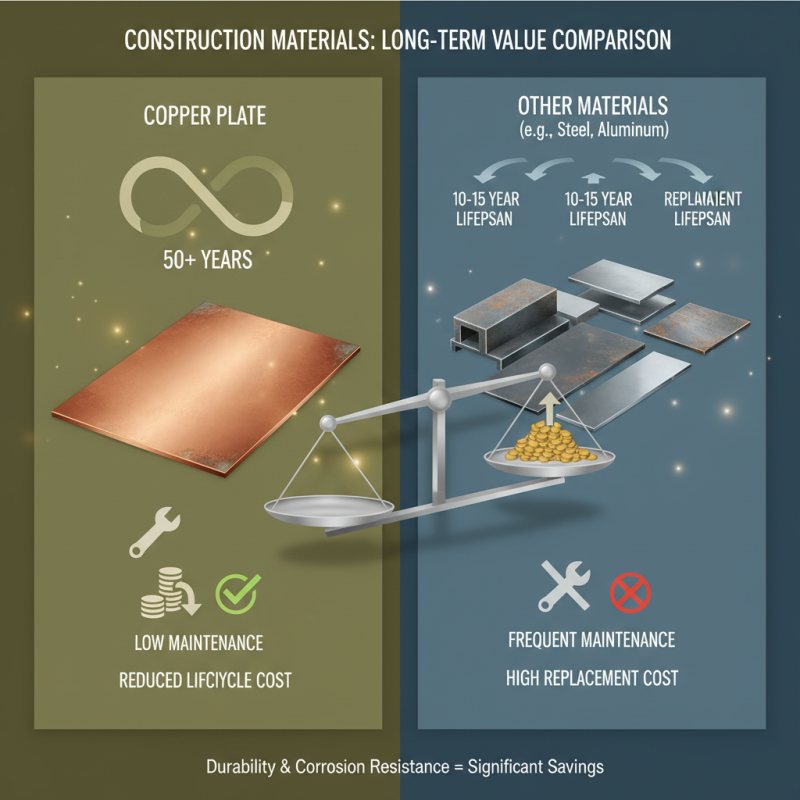
When considering materials for construction and manufacturing projects, the long-term cost-effectiveness of copper plate stands out significantly. According to a report by the International Copper Association, the durability and resistance to corrosion of copper make it an economically sound choice. While the initial investment in copper plate might be higher than other materials, its lifespan can be several decades longer, yielding savings on maintenance and replacement costs. Industry studies indicate that copper's average lifecycle spans over 50 years, effectively reducing total lifecycle costs compared to materials that may need replacing every 10 to 15 years.
Furthermore, copper's intrinsic properties can lead to lower operational expenses in energy efficiency. The U.S. Department of Energy has cited that copper’s superior conductivity is beneficial in electrical applications, resulting in lower energy consumption when utilized in electrical systems. This benefit not only contributes to monetary savings over time but also aligns with the growing emphasis on sustainable practices in various industries. Thus, while the upfront costs of copper plate may appear significant, its long-term value makes it a prudent investment for diverse projects, ensuring cost savings and environmental advantages for years to come.