2026 How to Choose the Right Copper Pipes for Your Plumbing Needs?
Choosing the right copper pipes for your plumbing needs is crucial. Copper pipes are known for their durability and reliability. They can withstand extreme temperatures and pressure. However, not all copper pipes are the same. Different types and grades exist. Each type serves specific purposes in plumbing systems.
When selecting copper pipes, consider your project's requirements. You must think about the water quality and the environment. In some cases, using the wrong type can lead to issues. This can cause leaks or reduced efficiency. Thus, having a clear understanding is essential.
Many homeowners overlook the importance of pipe sizing. The right size affects water flow and pressure. Additionally, consider professional advice if you're unsure. While copper pipes are a solid choice, mistakes can happen. It is crucial to reflect on your options carefully before making a decision.
Understanding Different Types of Copper Pipes for Plumbing Applications
Choosing the right copper pipes for plumbing can be daunting. Several types exist, each suited for specific applications. The most common types are Type K, Type L, and Type M.
Type K pipes have the thickest walls, making them ideal for underground installations. They are robust but can be costly. Type L pipes are versatile. They are often used for both residential and commercial applications. Their lighter weight allows for easy handling. Type M pipes are the thinnest and best for light-duty plumbing. However, they may not be suitable for high-pressure systems.
When selecting copper pipes, consider the environment. In corrosive areas, thicker options may be necessary. The location also plays a role; exposed pipes might need insulation. Look for localized plumbing codes to ensure compliance. Smaller fittings can save space, but impact flow rates. Pay attention to joint connections; soldering requires practice. Mistakes can lead to leaks. Reflect on the long-term implications of your choice. Will the pipes withstand wear and tear?
Experience shows that proper installation and maintenance are vital. The right choice leads to reliable plumbing systems. Yet, even the best pipes can fail when improperly installed. Think carefully about your specific plumbing needs. Understanding these factors will help you make informed decisions.
Factors to Consider When Selecting Copper Pipes for Your Plumbing System
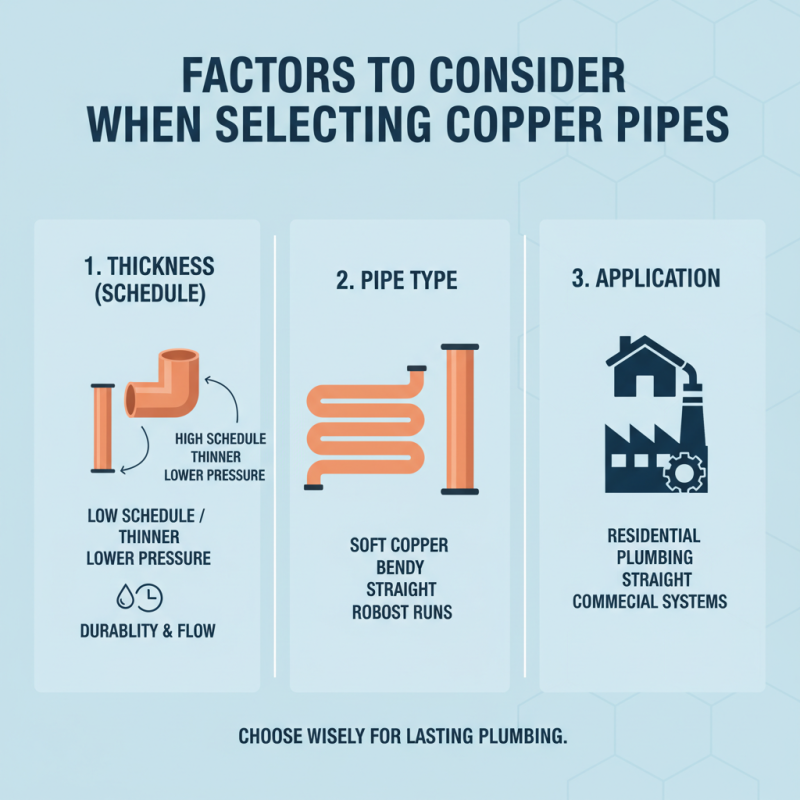
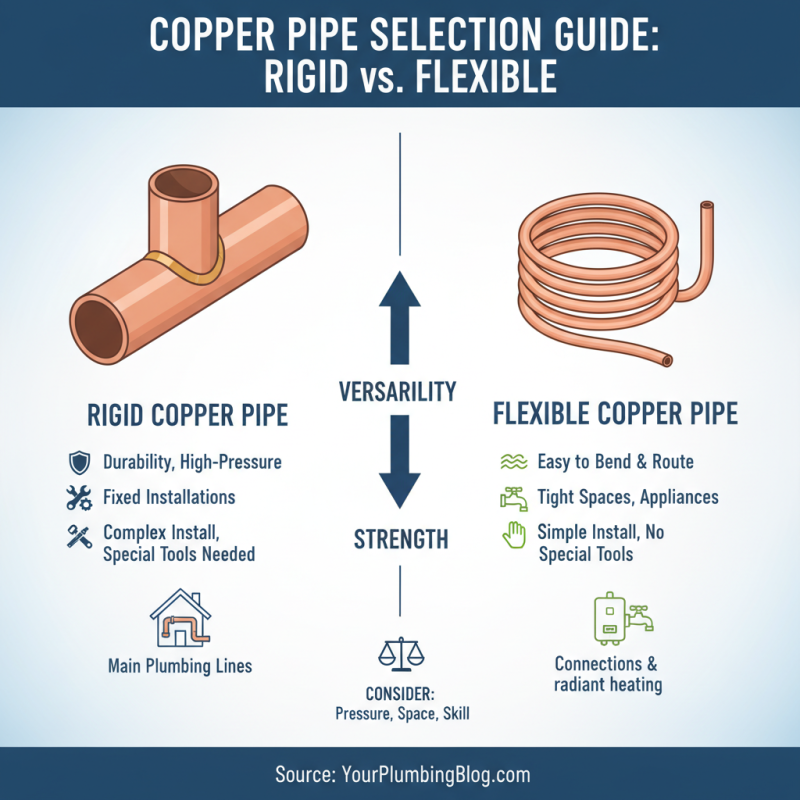
When selecting copper pipes for your plumbing system, several factors come into play. The thickness of the pipe, measured in schedules, affects durability and flow rate. Higher schedules mean thicker walls. Thin pipes may not withstand high pressure and could burst over time. Copper pipe is also available in different types: soft and rigid. Soft copper can bend easily, making it suitable for unique layouts. Rigid copper is better for straight runs and is generally more robust.
Another critical aspect is pipe diameter. Larger diameters support greater water flow but may take up more space. Consider the flow requirements of your home. It's essential to balance size with efficiency. Think about how the pipes fit your design and plumbing needs.
Lastly, consider the environment. Corrosion can be an issue in some areas. The local water quality will influence your choice. Are there high levels of acidity or minerals? Reflecting on these factors can help ensure you choose the right copper pipes, leading to a reliable plumbing system.
Assessing Pipe Sizes and Thickness for Optimal Plumbing Performance
When selecting copper pipes for plumbing, pipe size and thickness play a crucial role. The diameter of a pipe affects the water flow rate. According to the American Society of Plumbing Engineers, a 3/4-inch copper pipe can carry about 12 gallons of water per minute. This can significantly impact water pressure in your home. Furthermore, the thickness, or wall gauge, of the pipe also influences durability and heat retention. Thicker pipes generally offer better longevity in high-pressure systems.
Tips for selecting the right size include measuring existing systems first. Use a tape measure to assess current pipe dimensions. Keep in mind that larger pipes may lead to issues if not paired with appropriate fixtures. An oversized pipe can create flow reduction and unwanted turbulence. A more conservative approach may offer better results.
When it comes to thickness, consider your plumbing's required endurance. For residential applications, type M pipes are commonly used, as they provide adequate strength for lower-pressure systems. However, if you’re in an area prone to freezing temperatures, consider going with type L for increased resistance. Always consult with local building codes to ensure compliance and optimal performance. Remember, selecting the right copper pipe is about finding a balance between flow capacity and strength.
2026 How to Choose the Right Copper Pipes for Your Plumbing Needs? - Assessing Pipe Sizes and Thickness for Optimal Plumbing Performance
| Pipe Diameter (inches) |
Thickness (kitchen use) |
Thickness (bathroom use) |
Max Pressure (psi) |
Recommended Use |
| 1/2 |
0.024 |
0.028 |
500 |
Residential plumbing |
| 3/4 |
0.035 |
0.040 |
350 |
Larger home systems |
| 1 |
0.049 |
0.054 |
250 |
Commercial buildings |
| 1 1/4 |
0.065 |
0.072 |
150 |
Industrial applications |
Identifying Common Installation Challenges and Solutions for Copper Pipes
Installing copper pipes can be a rewarding but challenging task. One common issue is dealing with tight spaces in homes. When navigating cramped areas, special fittings may be necessary. This can lead to increased costs and complexity. Sometimes, miscalculating lengths causes wasted materials and frustration. It’s crucial to measure twice and plan carefully.
Another challenge arises during soldering. If not done properly, joints may leak. Skilled hands and a steady approach are essential. Beginners should practice before tackling the main installation. Additionally, temperature control plays a significant role. Too much heat can damage the pipe; too little can lead to weak joints. Ensuring the right temperature is a nuanced skill.
Lastly, the connection to existing plumbing can present obstacles. Older homes may have different pipe sizes or materials. This mismatch can complicate installation. A thorough inspection before starting can reveal hidden problems. Flexibility and patience will help you overcome these installation hurdles.