How to Choose the Right Carbon Steel Pipe for Your Needs?
Choosing the right Carbon Steel Pipe is crucial for various applications. The global carbon steel pipe market was valued at around $100 billion in 2021, with consistent growth expected. Key factors include strength, corrosion resistance, and material grades.
Consider your specific needs. For instance, pipes differ in wall thickness and diameter. Applications in construction or oil and gas often require robust solutions. The right selection affects durability and performance.
Not all pipes are created equal. A miscalculation in choosing a Carbon Steel Pipe can lead to costly repairs. Opportunities exist to leverage advanced materials and new manufacturing techniques. Reflect on your current project demands. This can guide you to a more suitable choice.
Understanding Carbon Steel Pipe Characteristics
When selecting carbon steel pipes, understanding their characteristics is essential. Carbon steel pipes are known for their strength and durability. They are suitable for various applications, including construction and transportation. However, the properties of these pipes can vary significantly based on their carbon content. High-carbon steel offers more strength but less ductility, making it less suitable for bending and shaping.
Tips: Always consider your application needs. If flexibility is essential, opt for lower carbon content pipes. Analyze the environment where the pipes will be used. For example, in high-pressure systems, higher tensile strength is vital.
The manufacturing process can also affect the pipe's characteristics. Seamless pipes, for instance, are crafted from solid round billets. This process provides a uniform structure that is resistant to pressure. Welded pipes, while offering cost advantages, may have imperfections, leading to potential weak points. These factors must be carefully weighed against your requirements.
Tips: Inspect the pipe specifications thoroughly. Look for certifications that indicate quality and reliability. Don’t hesitate to consult with professionals to understand the implications of various pipe types better.
Identifying the Appropriate Pipe Size and Schedule
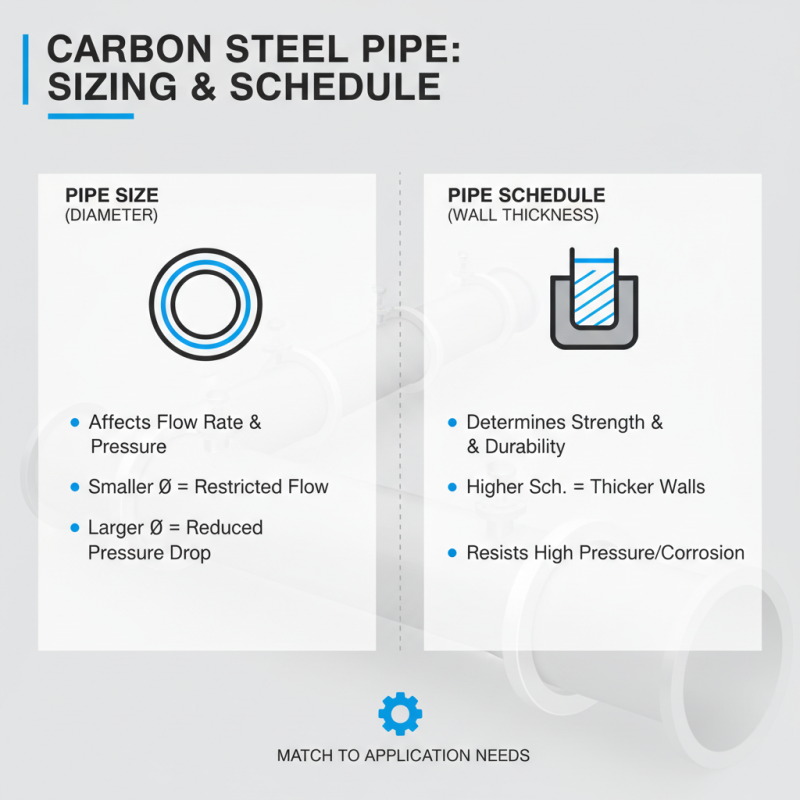
Choosing the right carbon steel pipe can be challenging. Understanding pipe size and schedule is essential. Pipe size affects flow rates and pressure. The diameter must match the application’s requirements. For instance, a smaller diameter restricts flow, while a larger one can reduce pressure drops.
Pipe schedules indicate the wall thickness. A higher schedule means thicker walls. Industry standards recommend using Schedule 40 for most applications. However, for high-pressure systems, Schedule 80 may be necessary. Reports suggest that proper sizing can improve energy efficiency by up to 30%. This is crucial for large-scale industrial operations.
Some users may overlook these details, leading to inefficiencies. It’s vital to consult technical resources for precise specifications. Misjudgments in size or schedule can result in costly repairs. Also, environmental factors, such as temperature and corrosion, should influence your decision. Always evaluate your specific needs against industry standards. This approach will ensure reliability and long-term performance.
Evaluating Corrosion Resistance and Coating Options
When selecting carbon steel pipes, assessing corrosion resistance and coating options is crucial. Carbon steel is valued for its strength, but it is also susceptible to corrosion. A report from the American Society for Testing and Materials (ASTM) highlights that carbon steel, if uncoated, can lose up to 90% of its strength after just 20 years in harsh environments. This vulnerability makes corrosion prevention essential.
Choosing the right coating can significantly enhance the pipe's durability. Options include galvanization, epoxy coatings, and polyurethane finishes. For example, a study by the Steel Pipe Institute reveals that galvanized pipes can resist corrosion for over 50 years in moist conditions. However, these coatings are not foolproof. Inconsistent application can lead to weakened areas that still invite rust. It's a reminder of the need for careful inspection and maintenance plans to ensure long-lasting performance.
Finally, consider the environmental conditions your pipes will face. Factors like humidity, temperature, and exposure to chemicals play vital roles. A report from the National Association of Corrosion Engineers (NACE) states that 30% of the cost of corrosion can be managed through proper selection of materials and coatings. Understanding these elements can lead to more informed decisions when choosing carbon steel pipes.
Assessing Mechanical Properties and Standards
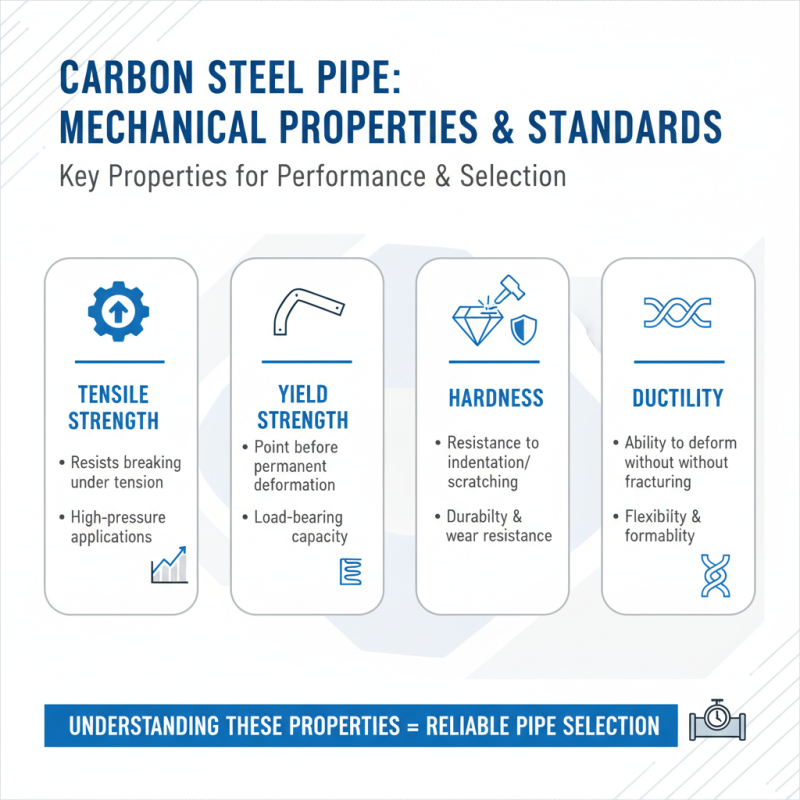
When selecting a carbon steel pipe, understanding mechanical properties is vital. These properties include tensile strength, yield strength, hardness, and ductility. Each property determines how the pipe performs under pressure or stress. For example, higher tensile strength indicates better performance in high-pressure applications.
Tips: Look for pipes with specific mechanical testing certifications. This ensures they meet required standards and specifications. Always verify test results to ensure reliability.
Standards play an essential role in the selection process. They guide the manufacturing and testing of pipes. Familiarize yourself with standards like ASTM and API. They define quality benchmarks. However, not all standards fit every application. Assess your unique needs and specifications.
Tips: Consider the environmental factors the pipe will face. Corrosion resistance is crucial in certain contexts. Evaluate the potential impact on durability and lifespan.
Keep in mind that not every pipe is perfect for your project. Some may lack adequate certifications. Others may not meet your mechanical property thresholds. Reflect on these factors during your selection process to make informed decisions.
Determining Application-Specific Requirements
Choosing the right carbon steel pipe hinges on specific application requirements. Understanding these needs ensures optimal performance. For example, the API 5L standard outlines different specifications for line pipes. This is vital for pipelines transporting oil and gas, where failure is not an option.
Consider the environment where the pipe will be used. In corrosive settings, a higher resistance grade is necessary. Studies have indicated that over 30% of pipeline failures stem from inadequate material selection. Selecting the right grade of carbon steel is crucial to increase durability and safety.
Evaluate dimensions and pressure ratings closely. The most common dimensions fall within datasets provided by ASME. Projects sometimes underestimate these factors, leading to costly repairs. A detailed analysis here can prevent future issues. Always prioritize quality over cost to avoid potential risks.
How to Choose the Right Carbon Steel Pipe for Your Needs?
| Pipe Size (inches) |
Wall Thickness (inches) |
Maximum Pressure (psi) |
Temperature Resistance (°F) |
Common Applications |
| 1 |
0. Schedule 40 |
150 |
400 |
Water Transport |
| 2 |
0. Schedule 80 |
200 |
600 |
Oil & Gas |
| 3 |
0. Schedule 120 |
300 |
800 |
Chemical Processing |
| 4 |
0. Schedule 160 |
500 |
1200 |
High-Pressure Systems |