How to Source Cold Rolled Sheet Effectively in 2026?
In 2026, sourcing Cold Rolled Sheet requires a strategic approach. This material is essential for various industries, including automotive and construction. As the demand increases, understanding the sourcing landscape becomes vital.
Navigating suppliers and manufacturers is challenging. Many companies face issues with quality and consistency. Choosing a reputable supplier is crucial. Research their history and customer reviews. Only work with those who demonstrate reliability.
Consider local sources for Cold Rolled Sheet. They can reduce shipping costs and lead times. However, local options may have limitations. Be prepared to adapt to fluctuations in availability and pricing. This fluid market demands flexibility and innovation to meet changing needs.
Understanding Cold Rolled Sheet and Its Applications in 2026
Cold rolled sheet is crucial in various industries, including automotive, construction, and electronics. In 2026, the demand for cold rolled sheet is projected to rise significantly. According to a recent industry report, the global market for cold rolled products is expected to reach $600 billion by 2026. This growth is driven by the need for lightweight and high-strength materials.
The applications of cold rolled sheet are diverse. In the automotive industry, it is used for producing vehicle bodies, chassis parts, and numerous components. These sheets offer superior surface quality and precise thickness, which enhance the aesthetic and functional properties of vehicles. In construction, they are integral for beams, panels, and roof structures. However, sourcing high-quality cold rolled sheets can present challenges. Price volatility and regional supply chain issues can create uncertainty.
Quality assurance is essential when sourcing cold rolled sheets. It's vital to partner with reliable suppliers. Engaging with companies that use advanced technology in processing ensures consistency in product quality. Frequent audits of suppliers and material testing can prevent issues. It's also useful to stay updated on market trends and innovations. Understanding the evolving requirements in the industry can help businesses make informed sourcing decisions.
How to Source Cold Rolled Sheet Effectively in 2026? - Understanding Cold Rolled Sheet and Its Applications in 2026
| Material Grade |
Thickness (mm) |
Width (mm) |
Length (mm) |
Application |
Market Demand (Tons) |
| SPCC |
0.5 |
1000 |
2000 |
Automotive Parts |
15000 |
| DQSK |
0.8 |
1200 |
2500 |
Home Appliances |
10000 |
| ST12 |
1.0 |
1500 |
3000 |
Industrial Equipment |
20000 |
| SPHC |
1.5 |
1250 |
1500 |
Construction |
12000 |
| CR4 |
2.0 |
1250 |
3000 |
Electric Panels |
8000 |
Identifying Reliable Suppliers and Manufacturers for Cold Rolled Sheet
When sourcing cold rolled sheets, identifying reliable suppliers is crucial. A good supplier should have a strong reputation in the industry. Look for suppliers who provide detailed product specifications. This ensures you understand what to expect in terms of quality and performance.
Evaluating a supplier's experience is key. Check how long they have been in the cold-rolled sheet market. Experienced suppliers tend to have better quality control processes. Customer reviews can provide insight into their reliability. However, not every review tells the full story. Some businesses may leave biased feedback.
Another point to consider is certification. Suppliers should possess relevant certifications to validate their processes. This emphasizes their commitment to quality standards. However, certifications alone do not guarantee reliability. It's essential to be proactive. Ask for references or case studies. By doing this, you can better assess their capabilities and track record.
Evaluating Quality Standards and Specifications for Cold Rolled Sheet
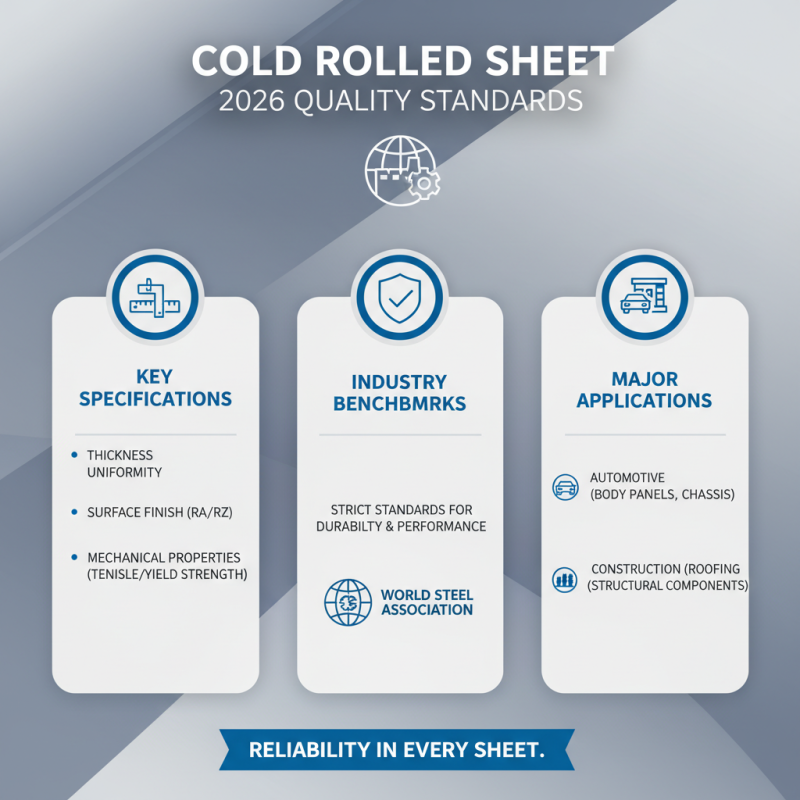
In 2026, sourcing cold rolled sheets requires a keen understanding of quality standards. Evaluating specifications involves examining thickness, surface finish, and mechanical properties. According to the World Steel Association, cold rolled sheets must meet stringent industry benchmarks to ensure durability and performance. Many industries rely on these sheets for automotive and construction purposes.
Quality assessments need a thorough approach. The ISO 9001 standard emphasizes the importance of consistent quality management. A systematic process for evaluating cold rolled sheets helps manufacturers avoid defects. Small imperfections can lead to significant issues down the line. Effective sourcing practices should prioritize suppliers with robust quality control.
Moreover, it's essential to consider sustainability in sourcing. A report from the International Energy Agency indicates that approximately 25% of the world’s steel production still relies on outdated practices. This raises questions about environmental impact. Potential sourcing partners must demonstrate commitment to sustainable practices and certifications. Failing to address these aspects could tarnish reputation and reduce market competitiveness. The path forward involves constant evaluation and adaptation to maintain quality in an evolving landscape.
Comparing Pricing Strategies and Cost Factors in Cold Rolled Sheet Sourcing
In 2026, effective sourcing of
cold rolled sheets requires a deep understanding of
pricing strategies and cost factors. Recent industry reports indicate that the cold rolled steel market is projected to grow at a
CAGR of 4.5% from 2024 to 2029. This growth is driven by increasing demand across various sectors, including automotive and construction.
Pricing strategies must consider multiple factors.
Material costs, production expenses, and shipping fees all play significant roles. Data from the Steel Manufacturers Association shows that raw material prices can fluctuate drastically, impacting final costs. It's essential to explore different suppliers to find competitive pricing. A local supplier may offer lower shipping costs, while an overseas manufacturer might provide cheaper raw materials but higher transport fees.
Negotiating effectively is key. Building relationships with suppliers can lead to better pricing agreements. However, relying exclusively on one supplier can pose risks. Diversifying suppliers can mitigate disruptions from market volatility. Regular assessments of
total cost of ownership will help shed light on hidden expenses. Balancing these elements will optimize sourcing strategies and ensure better price stability throughout the procurement process.
Leveraging Technology for Efficient Cold Rolled Sheet Procurement in 2026
In 2026, technology will play a crucial role in sourcing cold rolled sheets effectively. Advanced data analytics can optimize purchasing decisions. By analyzing market trends and supplier performance, companies can identify the best times to buy. Predictive analytics helps buyers anticipate fluctuations and price changes. This proactive approach minimizes costs and maximizes quality.
Automation in procurement processes can streamline operations. Automated systems reduce human error and save time in order processing. Efficient inventory management tools ensure that stock levels are optimal. They allow for timely reorder alerts and minimize excess inventory. Suppliers can also benefit from technology through digital platforms that enhance communication.
While these technologies show promise, challenges remain. Dependence on data may lead to overlooking qualitative factors in supplier relationships. Maintaining human insight is crucial in procurement decisions. Businesses should be cautious of over-automation, as it can stifle creativity and flexibility. An effective strategy will blend technology with interpersonal skills to navigate the cold rolled sheet market effectively.
Cold Rolled Sheet Procurement Efficiency Analysis - 2026