10 Tips for Buying Color Coated Coil?
Buying Color Coated Coil is not simply a matter of choosing a bright color and the lowest quoted price. The coil must match your forming process, building environment, appearance expectations, and service life requirements. A suitable purchase begins with the steel substrate, coating system, thickness tolerance, width accuracy, and paint performance. It also requires clear communication between the buyer, supplier, and end user.
This guide presents ten practical tips for making a more reliable decision. It explains how to verify coating type, compare paint thickness, review technical data, and assess corrosion resistance. Supplier experience matters. So does traceability. Ask for mill certificates, inspection records, sample panels, and realistic warranty terms. A professional supplier should explain limitations instead of promising perfect performance in every climate. Small details count. A scratched edge can become a serious problem during transport or fabrication.
Price alone misleads. It often hides differences in substrate quality, coating weight, packaging, or delivery control. I have learned that even a detailed checklist can miss local weather conditions and production habits. That is worth remembering. Inspecting samples under natural daylight may reveal shade differences that photographs conceal. Confirm dimensions before production, especially when automated profiling equipment is involved. Consider the total cost, including waste, maintenance, replacement risk, and delivery delays. With careful questions and documented evidence, buyers can select Color Coated Coil that performs consistently, looks appropriate, and supports dependable long-term results.
Understand Color Coated Coil Types and Common Applications
10 Tips for Buying Color Coated Coil
Color coated coil combines a metal substrate with a protective and decorative coating. The right type depends on the service environment. Galvanized steel suits general roofing and wall panels. Galvalume steel offers stronger resistance to atmospheric corrosion. Aluminum coil is lighter and performs well in humid or coastal areas.
Common coating systems include polyester, silicon-modified polyester, polyurethane, and PVDF. Polyester works for indoor panels and moderate outdoor exposure. Higher-performance coatings suit strong sunlight, industrial air, or frequent cleaning. Plastisol can provide a thicker surface, but it may not fit every forming process. Check coating thickness, gloss, hardness, and color consistency. A bright sample can look different after installation.
Tip 1: Match the substrate to moisture and pollution levels. Tip 2: Confirm the coating system before comparing prices. Tip 3: Check whether the coil fits your roll-forming equipment. Tip 4: Inspect the edges, scratches, and protective film. Small defects matter.
Applications vary widely. Roofing sheets need stable color and weather resistance. Wall cladding may require better scratch performance during handling. Appliance panels often prioritize smooth appearance and cleanability. Doors and HVAC components may need precise forming without coating cracks. Ask for test reports, coating specifications, and batch records. In practice, a cheap coil can become expensive after premature fading or poor forming. I have found that color matching is rarely perfect under every light. Natural daylight, warehouse lighting, and installed shadows can change the result. Allow for that uncertainty.
Evaluate Coating Systems, Surface Finish, and Color Consistency
When buying color coated coil, start with the coating system, not the sample color. Ask whether the steel uses polyester, PVDF, polyurethane, or another specified finish. Each system offers different resistance to ultraviolet exposure, moisture, abrasion, and forming. Request the coating thickness, primer type, curing method, and documented test results. A glossy panel can look impressive. But gloss alone proves little.
Inspect the surface under daylight and angled warehouse lighting. Look for pinholes, orange peel, scratches, oil marks, and uneven gloss. Run a clean glove across the sheet; roughness or powder may indicate a curing problem. Check both sides, especially near coil edges where handling damage often appears. I once accepted a visually attractive sample that differed slightly after forming. That mistake taught me to test the actual production coil.
Color consistency requires more than matching one small swatch. Compare samples from the coil head, middle, and tail. Use the same light source, viewing angle, and color measurement method. Confirm an agreed color tolerance before production, and record the reference standard. Paint batches can shift. Even qualified suppliers need monitoring. After bending or roll forming, inspect exposed edges for cracking, whitening, or color change. Photos help, but physical samples remain more reliable.
10 Tips for Buying Color Coated Coil: Evaluate Coating Systems, Surface Finish, and Color Consistency
A practical purchasing checklist should prioritize coating-system suitability, surface quality, and color consistency while also considering corrosion protection, dimensional control, and supplier documentation.
The percentages show an illustrative procurement weighting for a general color-coated coil evaluation. Actual priorities should be adjusted for the end-use environment, forming requirements, exposure conditions, and applicable standards.
Check Supplier Reliability, Quality Certification, and Product Inspection
10 Tips for Buying Color Coated Coil
A reliable supplier should provide clear company records, production details, and verifiable customer references. Do not trust polished photos alone. Visit the factory when possible, or arrange an independent production audit. Check whether the supplier controls raw materials, coating lines, storage conditions, and shipment procedures. Ask for realistic lead times, not attractive promises. Reliable communication matters when specifications change or defects appear. A supplier that avoids difficult questions may create larger problems later.
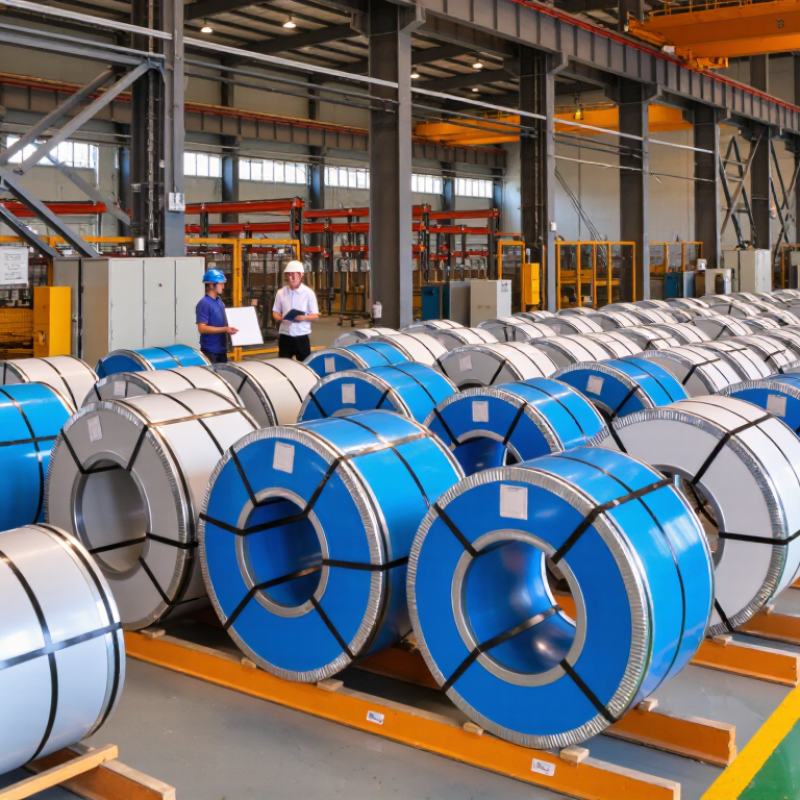
Quality certification can support your decision, but it is not proof of every coil’s performance. Verify the certificate number, issuing body, validity period, and covered production site. Confirm that the certification scope matches color coated steel products. Request technical data for coating thickness, substrate grade, paint system, gloss, and corrosion resistance. Product inspection should include width, thickness, color consistency, surface cleanliness, adhesion, and edge condition. Ask for batch-based test reports and traceability records. Inspect packaging carefully; crushed corners and loose wrapping can damage finished surfaces. A pre-shipment inspection is useful, yet it cannot replace occasional checks after delivery. Samples may pass while mass production varies. That happens. Keep retained samples, inspection photographs, and written acceptance criteria. Independent testing is worth considering for large orders or demanding environments. Past experience taught me one uncomfortable lesson: low price often hides inspection, packaging, or communication costs.
Compare Pricing, Packaging, Delivery Terms, and After-Sales Support
Buying color coated coil requires more than comparing the quoted price per tonne. A practical cost sheet should include steel grade, thickness tolerance, coating mass, paint system, width, minimum order quantity, and currency terms. The World Steel Association’s Short Range Outlook 2024 projects global steel demand at about 1.75 billion tonnes in 2024 and 1.79 billion tonnes in 2025. That scale does not guarantee stable prices. Request a validity period and a clear adjustment formula. A cheaper coil can become expensive after freight, inspection, and rejected material.
Packaging deserves close attention. Ask for coil weight limits, eye orientation, edge protection, waterproof wrapping, and corrosion-resistant inner paper. Photograph the loading condition. UNCTAD’s Review of Maritime Transport 2024 states that shipping carries over 80% of world trade by volume, so port delays can affect production schedules. Compare delivery terms carefully. Confirm whether the quote uses EXW, FOB, CIF, or DDP, and identify who handles insurance, customs, storage, and demurrage. Do not accept “fast delivery” without a shipment window and partial-delivery rules.
After-sales support should be measurable. Require mill certificates, coating and paint test records, batch traceability, and retained samples. Clarify the claim period, evidence required, replacement process, and response time. Relevant performance requirements may refer to EN 10169 or ASTM A755, depending on the application. A common purchasing mistake is trusting a polished certificate without checking coil markings against the documents. I have seen specifications become vague at this stage. That is where assumptions should stop. Ask for a written remedy if color variation, blistering, edge damage, or concealed rust appears after opening.