Leave Your Message

10 Best Carbon Steel Plate Suppliers Worldwide

Choosing the right Carbon Steel Plate supplier affects project safety, cost, and delivery reliability. This guide examines ten respected suppliers serving international markets. The selection considers product consistency, manufacturing capacity, technical support, certifications, and customer experience.

Quality begins at the mill. Reliable suppliers should provide traceable heat numbers, material certificates, and clear chemical analysis. Their plates may support construction, shipbuilding, pressure vessels, bridges, and heavy machinery. Thickness tolerance matters. So does surface condition. A plate arriving with deep scale, edge damage, or unclear labeling can create costly delays.

Real-world performance also depends on communication. Suppliers must explain available grades, cutting services, minimum order quantities, and shipping arrangements. Independent inspection can strengthen confidence, especially for large or safety-sensitive projects. Delivery records deserve attention too. A competitive quotation means little if production dates remain uncertain.

“Best” is not permanent.

Market conditions change. Prices, lead times, and regional availability can shift quickly. Some suppliers may excel in bulk orders but offer limited support for smaller buyers. Others may provide excellent documentation while charging more for customization. This outline compares those differences rather than treating every supplier as equally suitable. Readers should verify current certifications, testing requirements, and import conditions before placing an order. Experience suggests that careful questions often reveal more than polished brochures. Mistakes can still happen, particularly when specifications are incomplete. Reliable purchasing requires review, patience, and documented communication.
10 Best Carbon Steel Plate Suppliers Worldwide

What Is Carbon Steel Plate and Why Does Supplier Choice Matter?

Carbon steel plate is a flat, rolled product made mainly from iron and carbon. Its carbon content influences strength, hardness, weldability, and forming behavior. Common applications include bridges, pressure vessels, machinery frames, storage tanks, and heavy equipment. A plate may look simple, but its internal quality matters.

Supplier choice affects more than price. Reliable suppliers provide accurate grade information, mill test certificates, heat numbers, and clear dimensional tolerances. These records help engineers verify chemical composition and mechanical performance. Practical checks should include thickness, flatness, surface scale, edge condition, and ultrasonic testing when internal flaws could create serious risks. Packaging also matters. Plates exposed to rain during transport may arrive with avoidable corrosion.

A capable supplier understands the difference between a standard structural plate and a plate intended for demanding fabrication. They can discuss welding requirements, cutting losses, minimum order quantities, and realistic delivery schedules. Ask how materials are stored and traced before shipment. Ask difficult questions.

A low quotation can seem attractive. It may hide inconsistent thickness, weak documentation, or expensive rework. Still, the highest price does not automatically prove superior quality. Comparing inspection records, technical support, production capacity, and complaint handling creates a more reliable decision. I have found that specifications are often clearer than real-world assumptions, yet small details can still be missed. A careful supplier leaves fewer surprises when the plate reaches the workshop.

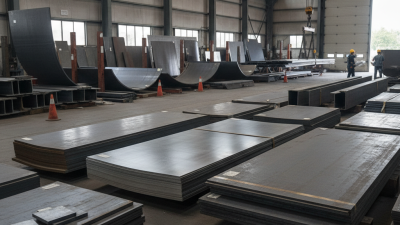
How to Evaluate Global Carbon Steel Plate Manufacturers

How to Evaluate Global Carbon Steel Plate Manufacturers

The World Steel Association’s World Steel in Figures 2024 reports about 1.89 billion tonnes of crude steel production in 2023. This scale creates choice, but it also hides uneven quality. A serious evaluation should begin with the plate’s intended service. Check grade, thickness, width, yield strength, tensile strength, and impact requirements. Do not accept a generic “high quality” claim.

Request heat numbers and matching mill test certificates for every shipment. Verify chemical composition, mechanical results, rolling direction, and dimensional tolerances. Standards such as ASTM A36, ASTM A572, and EN 10025 can guide comparison, but the exact edition matters. Ask for independent inspection records when the order is large. A certificate without traceability is weak evidence.

Production capacity needs practical testing. Ask how many plates can be rolled within the required thickness range, then compare that answer with delivery records. Review nonconformance rates, corrective-action reports, packaging photographs, and loading procedures. Plates should arrive on dry supports, with readable markings and protected edges. Delivery promises often look better than factory reality. I would inspect a sample before signing a long contract. My own checklist can still miss poor communication during a delay. That weakness deserves attention. Supplier reliability includes honest updates, not only laboratory results. The World Steel Association data shows a huge industry, yet size alone cannot prove consistency.

Key Standards, Grades, and Product Specifications

Carbon steel plate suppliers serve a market producing nearly 1.89 billion tonnes of crude steel annually. The World Steel Association reported this global output for 2023. Yet volume does not prove plate quality. Buyers should verify the applicable standard, heat number, chemical composition, and test certificate for every shipment.

Common grades include ASTM A36 for general structural work, ASTM A572 Grade 50 for higher-strength fabrication, and ASTM A516 Grade 60 or 70 for pressure vessels. European projects often specify EN 10025 S275 or S355. These grades differ in yield strength, tensile strength, weldability, and impact performance. For offshore applications, additional requirements may include low-temperature toughness and ultrasonic testing. A supplier should state thickness tolerance, plate dimensions, surface condition, and delivery condition clearly.

The International Energy Agency continues to identify steel as a major industrial emissions source, so production route and recycled content deserve careful review. Ask for an EN 10204 3.1 inspection certificate, not only a commercial datasheet. Check whether the reported values match the ordered heat. Small gaps matter. I have seen specifications that looked complete but omitted impact-test temperature or flatness limits. That omission can delay fabrication and raise costs. Supplier comparisons should therefore consider traceability, independent testing, and realistic lead times, not just price.

10 Best Carbon Steel Plate Suppliers Worldwide - Key Standards, Grades, and Product Specifications

No. Supplier Profile Typical Supply Region Key Standards Representative Grades Typical Thickness Typical Width × Length Indicative Mechanical Properties Common Product Forms Recommended Applications
1 Integrated Flat-Steel Mill East Asia ASTM A36; ASTM A572; EN 10025-2; JIS G3101 A36, A572 Grade 50, S275JR, S355JR, SS400 6–150 mm 1,500–3,200 × 3,000–12,000 mm Yield strength approximately 235–345 MPa; tensile strength approximately 360–630 MPa Hot-rolled plates, normalized plates, cut-to-size plates Structural frames, bridges, machinery bases, general fabrication
2 Pressure-Vessel Plate Producer Europe ASTM A516/A516M; EN 10028-2; EN 10204 A516 Grade 60, A516 Grade 70, P265GH, P355GH 6–200 mm 1,500–3,000 × 3,000–14,000 mm Yield strength approximately 220–355 MPa; tensile strength approximately 415–580 MPa Normalized plates, fine-grain plates, ultrasonic-tested plates Boilers, storage tanks, pressure vessels, heat-processing equipment
3 High-Strength Structural Plate Supplier North America ASTM A572/A572M; ASTM A656/A656M; ASTM A709/A709M A572 Grade 50, A572 Grade 65, A656 Grade 80, A709 Grade 50 6–100 mm 1,500–3,050 × 3,000–15,000 mm Yield strength approximately 345–550 MPa; tensile strength approximately 450–620 MPa HSLA plates, normalized plates, quenched-and-tempered plates Heavy equipment, crane structures, bridges, transport equipment
4 Shipbuilding Plate Manufacturer Northeast Asia ASTM A131/A131M; EN 10025-2; IACS-recognized rules Grade A, Grade AH36, Grade DH36, S355J2+N 6–120 mm 1,500–3,200 × 6,000–18,000 mm Yield strength approximately 235–355 MPa; tensile strength approximately 400–570 MPa Marine-grade plates, shot-blasted plates, primer-coated plates Ship hulls, offshore structures, barges, marine platforms
5 Wear-Resistant Plate Specialist Central Europe EN 10025-2; EN ISO 6506-1; ASTM E10 S235JR, S355JR, abrasion-resistant grades with nominal 400–500 HBW hardness 4–120 mm 1,500–3,000 × 3,000–12,000 mm Typical hardness range approximately 360–540 HBW, depending on grade Quenched-and-tempered plates, laser-cut blanks, formed components Mining equipment, crushers, conveyors, dump bodies, wear liners
6 Offshore and Marine Plate Supplier Northern Europe EN 10025-2; EN 10225; API 2W S355J2+N, S355G8+N, S355G10+N, API 2W Grade 50 8–150 mm 1,500–3,500 × 4,000–16,000 mm Yield strength generally 355 MPa minimum for S355 grades; impact testing may be specified Normalized plates, thermomechanically rolled plates, Z-quality plates Offshore platforms, wind-turbine foundations, jackets, subsea structures
7 Construction Steel Plate Distributor Southeast Asia JIS G3101; ASTM A36; EN 10025-2 SS400, SM490A, A36, S275JR 3–80 mm 1,220–2,500 × 2,440–12,000 mm Yield strength approximately 235–325 MPa; tensile strength approximately 400–610 MPa Hot-rolled plates, pickled plates, slit or cut plates Buildings, platforms, brackets, tanks, general steelwork
8 Low-Temperature Service Plate Producer Eastern Europe and Central Asia ASTM A516/A516M; ASTM A572/A572M; EN 10025-3 A516 Grade 60, A516 Grade 70, S275N, S355NL 8–180 mm 1,500–3,000 × 3,000–14,000 mm Yield strength approximately 275–355 MPa; impact testing commonly specified at sub-zero temperatures Normalized plates, fine-grain plates, impact-tested plates Storage tanks, pipelines, pressure equipment, cold-climate structures
9 Pipeline and Line-Pipe Plate Supplier Middle East and South Asia API 5L; ISO 3183; ASTM A516/A516M API 5L Grade B, X42, X52, X60, X65 6–50 mm 1,500–2,500 × 3,000–12,000 mm Specified minimum yield strength approximately 245–450 MPa, depending on grade Plate for longitudinally welded pipe, sour-service plate, normalized plate Oil and gas transmission, water pipelines, process piping, energy infrastructure
10 Custom Processing and Service-Center Supplier Australia and Oceania AS/NZS 3678; ASTM A36; ASTM A572/A572M Grade 250, Grade 350, A36, A572 Grade 50 5–100 mm 1,500–3,000 × 3,000–12,000 mm Yield strength approximately 250–350 MPa; tensile strength approximately 410–เหน510 MPa CNC-cut plates, beveled parts, drilled components, primed assemblies Mining, infrastructure, agricultural machinery, structural fabrication
Specification note: Actual availability, dimensions, tolerances, chemical composition, impact requirements, surface condition, inspection level, and certification must be confirmed against the applicable edition of the purchasing standard and the supplier’s mill test certificate.

Regional Strengths of Leading Carbon Steel Plate Suppliers

10 Best Carbon Steel Plate Suppliers Worldwide

Regional Strengths of Leading Carbon Steel Plate Suppliers

Carbon steel plate suppliers often reflect the industries around them. East Asian mills typically offer broad production capacity, competitive pricing, and many standard thicknesses. Their strength suits shipbuilding, construction, and general fabrication. Large ports also support efficient export handling. Fit comes first.

European suppliers are known for strict process control, traceability, and advanced plate grades. Their documentation often includes heat numbers, chemical analysis, impact results, and detailed inspection records. These features matter in pressure equipment, bridges, and demanding energy projects. However, premium certification can increase purchasing costs.

North American producers usually serve heavy equipment, infrastructure, and energy applications with strong domestic distribution networks. Buyers may benefit from shorter inland delivery times and responsive technical support. South Asian suppliers can provide flexible batch sizes and practical fabrication grades, while Gulf-region suppliers often support nearby construction and industrial projects. Regional proximity reduces logistical risk.

No region leads everywhere. A supplier with excellent steel quality may still struggle with packaging or delivery accuracy. I have seen small details, such as poorly protected plate edges, create avoidable rework. Buyers should compare mill certificates, dimensional tolerances, surface condition, and after-sales response, not only quoted price. Weather, port congestion, and local standards can also change the final result. The best choice depends on application, inspection needs, and delivery route. Even experienced procurement teams should recheck assumptions before placing a large order.

Comparing Quality, Pricing, Delivery, and Customer Support

Choosing among the 10 best carbon steel plate suppliers worldwide requires more than comparing quoted prices. Quality begins with consistent thickness, controlled chemistry, and traceable mill certificates. Ask for test reports showing yield strength, tensile strength, impact performance, and heat numbers. A plate may look flawless, yet poor flatness can complicate cutting and welding.

Pricing should reflect the complete landed cost. Include plate weight, protective packaging, inland transport, insurance, duties, and inspection fees. The cheapest offer can become expensive after delays or rejected material. Request a clear quotation with grade, dimensions, tolerances, minimum order quantity, and payment terms. Small details matter. Delivery performance also deserves evidence. Review production lead times, port schedules, loading photographs, and the supplier’s process for handling urgent changes. A reliable supplier should explain delays early, not after the vessel has departed.

Customer support often separates a capable supplier from a convenient one. Test response quality before ordering by sending technical questions. Notice whether replies include practical data or vague promises. Support should cover document corrections, cutting requirements, welding guidance, and claims handling. In my experience, one contact person helps prevent repeated explanations. Still, no supplier performs perfectly every time. A spreadsheet can hide communication gaps, and references may reflect unusually favorable projects. Check recent records, inspect samples when possible, and keep written specifications. Some evaluations will need revision after the first shipment. That is not failure; it is useful evidence.

Carbon Steel Plate Supplier Comparison Framework

Minimum specified yield strength is used as an objective quality reference for commonly traded carbon steel plate standards. When comparing suppliers worldwide, buyers should also verify pricing, delivery schedules, mill certificates, inspection records, and customer support.

Reference grades: ASTM A36, ASTM A572 Grade 50, ASTM A516 Grade 70, and EN 10025 S355JR. Values show minimum specified yield strength in MPa; actual availability, price, lead time, and service vary by supplier and market.