Leave Your Message

How to Choose a Hot Dip Pipe Supplier in 2026

Choosing a Hot Dip Pipe supplier in 2026 is a quality decision, not just a price comparison. A pipe may look sound on a warehouse rack, yet its coating consistency, documentation, or delivery history can tell a different story. Small gaps matter. Buyers should examine material traceability, coating inspection records, dimensional tolerances, packaging, and the supplier’s ability to meet the project schedule.

The scale of the steel industry makes reliable sourcing especially important. World Steel Association’s World Steel in Figures 2024 reports that global crude steel production reached 1,882.6 million tonnes in 2023. That figure does not predict demand for any one pipe product, but it shows the breadth of the supply chain behind steel components. Corrosion also carries a measurable economic cost: NACE International’s IMPACT study estimated the global cost of corrosion at US$2.5 trillion, or 3.4% of global GDP. The study noted that improved corrosion management could reduce costs, though results depend on the application and maintenance practices.

For buyers, these reports offer context, not a shortcut to supplier approval. Ask how the manufacturer controls hot-dip coating, verifies finished dimensions, and handles rejected batches. Request relevant test records and confirm that specifications match the project environment. Paperwork can look complete; that is not the same as dependable performance. A site visit or sample inspection may reveal practical details that a polished brochure cannot. Even a careful checklist leaves some uncertainty, so compare evidence, communication, and delivery performance before committing.
How to Choose a Hot Dip Pipe Supplier in 2026

Define Your Hot Dip Pipe Requirements for 2026

Start with the service conditions, not a catalog. Will the pipe carry water, support a structure, or run outdoors near salt spray? Record the fluid, operating pressure, temperature range, exposure, and expected service life. These details shape material, wall thickness, and coating choices. A pipe that looks suitable in a sample photo may not suit a damp process room.

Write down the dimensions your project actually needs: outside diameter, wall thickness, length, end type, and allowable tolerances. Specify whether ends need threading, grooves, or plain cuts. For hot-dip galvanized pipe, define coating requirements and how coating condition will be checked. Match the specification to the application and the relevant, current standards for your market. Do not rely on “standard thickness” without a stated measurement method. It can mean different things.

Include inspection and delivery needs before requesting supplier quotations. Ask what material records, dimensional checks, coating reports, and traceability documents can accompany each batch. Confirm packaging, transport protection, and whether cut ends require special treatment. If the design is still changing, mark estimates clearly and request a sample or trial batch where practical. I would leave room for revision; early drawings are rarely perfect. A precise requirement sheet makes supplier comparisons more useful and helps prevent costly assumptions.


Assess Supplier Experience, Production Capacity, and Technical Fit

A capable hot-dip pipe supplier should understand more than coating equipment. Ask how long the team has handled your pipe sizes, steel grades, and end finishes. Request recent inspection records for coating thickness, adhesion, and appearance. A consistent zinc surface matters, but so do straightness and clean threads. Small details become costly on site.

Production capacity must match your delivery plan, not just a brochure figure. Discuss monthly output, current order commitments, and how the supplier manages peak demand. Ask for a realistic schedule covering production, inspection, packing, and dispatch. If possible, review a sample bundle and its protective packing. No spreadsheet captures every delay. Leave room for one.

Technical fit deserves a direct conversation between your engineering team and the supplier’s production staff. Confirm the required outside diameter, wall thickness, pipe length, tolerances, and connection details. Share the project specification early, including any coating limits or testing requirements. Ask how deviations are documented and who approves them. A quick sample review can reveal thread damage or uneven coating before a full order proceeds. Not every supplier will fit. A clear answer about limitations is often more useful than a confident promise.

Verify Quality Systems, Material Traceability, and Compliance

A reliable hot dip pipe supplier should show how quality is controlled, not just display a certificate. Request the quality system certificate and check its validity, issuing body, and scope. Does it cover the actual pipe processing site? Ask for recent inspection records and how nonconforming products are isolated. Ask for evidence.

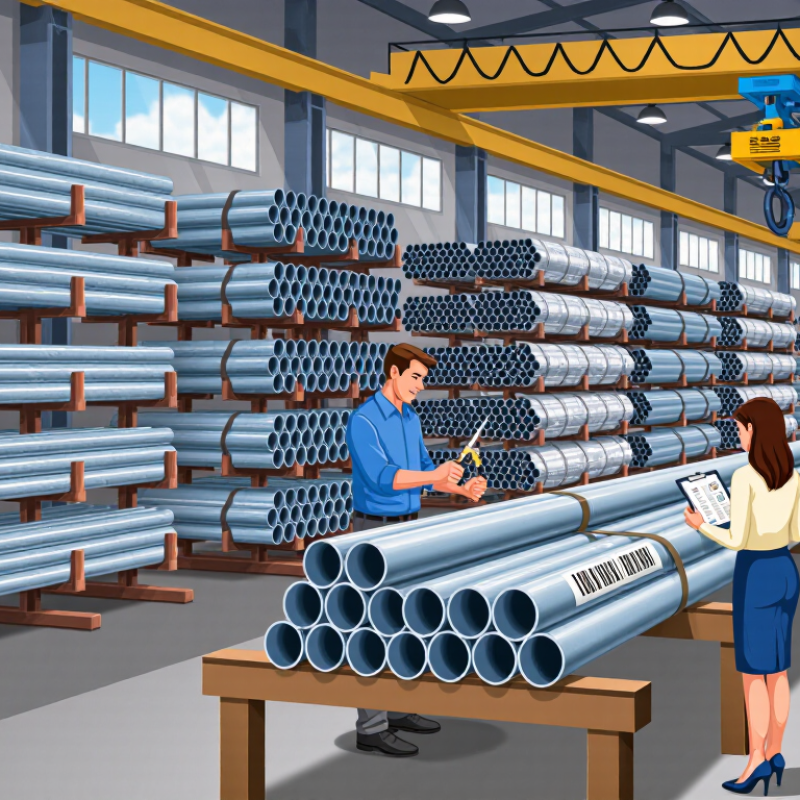
Traceability should connect each pipe bundle to its production records. Compare bundle tags with heat numbers, material test reports, and purchase documents. Check that grade, dimensions, and coating requirements match your specification. For a practical test, select one bundle and ask the supplier to trace it back to its source records. Gaps matter. Markings can be faint, and paperwork may not line up perfectly; note discrepancies and ask for written clarification before shipment.

Compliance depends on the project, destination, and specified standards. Confirm which requirements apply, then request supporting test reports and declarations for the exact product and production location. Where coating thickness or adhesion is critical, review measured results, sampling methods, and gauge calibration records. A certificate alone cannot prove every batch meets your needs. Visit the facility or arrange an independent inspection when risk or order value justifies it. Keep the approved documents with the purchase order, so receiving staff can check tags and records against the same requirements.

How to Choose a Hot Dip Pipe Supplier in 2026

Verify quality systems, material traceability, and compliance with the specifications required for your project.

ASTM A53 Grade A and Grade B have different minimum tensile and yield strength requirements. Ask suppliers to provide material test reports traceable to the delivered pipe, evidence of their quality system, and documentation confirming the applicable product and hot-dip coating requirements. Values shown are rounded minimums; verify the current standard edition and project specification.

Compare Pricing, Lead Times, Logistics, and After-Sales Support

How to Choose a Hot Dip Pipe Supplier in 2026: Compare Pricing, Lead Times, Logistics, and After-Sales Support

A low unit price can hide costs. Check what the quote includes: pipe grade, dimensions, coating thickness, inspection records, packaging, and export handling. Two offers may list the same pipe size but differ in coating weight, testing, or certificates. Ask for line-by-line pricing and confirm minimum order quantities. Compare landed cost, not just factory price; freight, duties, and unloading can change the decision.

Lead times need evidence too. Request a schedule showing production, inspection, dispatch, and expected arrival. Confirm capacity for your required pipe lengths and specifications. A short promised date means little if packaging or port booking remains unresolved. For logistics, check bundle protection, loading photos, shipping documents, and whether partial shipments are possible. These details matter when pipes arrive at a crowded site or need moving twice. Delays happen. Ask how the supplier shares updates and revised dates.

Tips: Request a recent inspection sample and a written defect procedure. Clarify who pays replacement freight and how quickly claims are acknowledged. Keep comparisons in a simple table. Forecasts can change, so treat every delivery schedule as an estimate, not a guarantee.

Evaluate Supplier Risks and Select the Best Long-Term Partner

A hot dip pipe supplier should be judged by more than a polished quotation. Ask how the supplier controls surface preparation, bath temperature, and coating thickness across a production run. Request inspection records and traceability details for the pipe material and finished coating. A sample is useful, but one clean sample proves little about batch consistency.

Look for practical evidence: dimensional checks, coating measurements, packaging methods, and clear handling instructions. Ask what happens when a test result falls outside the agreed range. A vague answer is a risk. So is a delivery promise that ignores production capacity or transport time. No checklist is perfect. An audit can still miss a weak handoff between production and dispatch.

Long-term fit also depends on communication after the order is placed. Discuss how the supplier reports delays, investigates defects, and manages changes in specifications. Ask for references from customers with similar pipe sizes or service conditions, then verify the details where possible. Compare the full cost of a dependable supply with the disruption caused by rework or late delivery. I would not treat a low price as proof of value; that assumption is easy to make and hard to correct later. A clear trial order can reveal gaps before they affect a larger project.

How to Choose a Hot Dip Pipe Supplier in 2026 — Evaluate Supplier Risks and Select the Best Long-Term Partner

Use this illustrative 100-point framework to compare shortlisted suppliers. Confirm requirements against the pipe specification, applicable standards, project conditions, and contract; coating requirements can vary by product and governing standard. Score each criterion from 1 (insufficient evidence or high risk) to 5 (verified and consistently controlled).

Evaluation dimension Weight Evidence to request Indicators of a lower-risk supplier Warning signs
Specification and standards compliance 20% Written confirmation of pipe material, dimensions, manufacturing route, end finish, coating requirements, inspection criteria, and applicable standards; sample inspection and test documentation. Offers are clearly tied to the buyer’s drawings and specifications. Deviations are identified and approved in writing before production. Vague claims of “standard quality”; unspecified standards or coating requirements; substitutions made without approval.
Product and coating quality 20% Inspection plan and recent, relevant records for dimensions, visual condition, coating checks, and any required mechanical or chemical tests. Acceptance limits and sampling methods are agreed in advance and linked to the applicable product specification. Nonconforming material is documented and controlled. One generic certificate presented for every order; no defined acceptance criteria; inconsistent inspection records or unresolved repeat defects.
Process control and corrective action 15% Documented production and galvanizing controls, equipment-maintenance records, inspection checkpoints, nonconformance reports, and corrective-action examples. Can explain how defects are detected, contained, investigated, and prevented from recurring; records are available for the relevant production lot. Quality depends only on final visual checks; no lot-level records; corrective actions are verbal or lack follow-up verification.
Traceability and documentation 10% Example document pack showing how order, production lot, material identification, inspection results, and shipping records are linked. Documents identify the supplied lot and match the order; revisions and approvals are controlled; records can be retrieved when a claim arises. Missing or conflicting lot references; certificates cannot be linked to shipped material; documents are issued only after repeated requests.
Capacity and delivery reliability 10% Order-specific production schedule, stated capacity assumptions, lead-time history for comparable orders, packaging plan, and shipment milestones. Lead times include clear assumptions and checkpoints. The supplier communicates delays early and provides a documented recovery plan. Unqualified delivery promises; no schedule visibility; repeated unexplained changes to production or dispatch dates.
Financial and business continuity 10% Appropriate financial references or credit review, business-continuity arrangements, insurance information where relevant, and a clear contracting entity. Commercial terms, payment milestones, responsibilities, and escalation contacts are transparent; continuity risks are discussed openly. Pressure for unusually large advance payments; unclear contracting responsibilities; inability to explain how supply would continue after disruption.
Health, safety, and environmental controls 5% Relevant site safety procedures, training and incident-management records, and information on applicable environmental permits and controls. Provides current, relevant records and can describe controls for worker safety, process hazards, and regulated environmental obligations. Missing required permits or records; repeated serious incidents without documented corrective action; unclear responsibility for compliance.
Service, claims, and after-sales support 5% Written warranty terms, claim-submission process, response contacts, and examples of how defects or delivery issues are investigated and resolved. Defines response and escalation channels, evidence requirements, responsibility, and the process for replacement, repair, or other agreed remedies. Warranty exclusions are unclear; no accountable contact; claims are routinely delayed or rejected without a documented technical review.
Long-term technical partnership 5% Technical review process, change-notification procedure, order-history reporting, and arrangements for periodic performance reviews. Supports specification reviews, gives advance notice of relevant process or material changes, and uses performance data to address recurring issues. Changes are made without notification; technical questions receive inconsistent answers; no process exists to review supplier performance.
Total weighting 100% Weighted result = sum of each criterion’s score (1–5) multiplied by its weight. Compare suppliers using the same evidence requirements and scoring rules.

Suggested interpretation for this comparison tool: 4.0–5.0 = preferred candidate, subject to all mandatory requirements; 3.0–3.9 = consider only with documented corrective actions; below 3.0 = significant qualification gaps. A high total score should not override a failure to meet a mandatory specification, legal requirement, or contract condition.