Leave Your Message

Top 10 Galvanized Plate Manufacturers Worldwide?

Choosing the right galvanized steel supplier can affect project safety, service life, and total purchasing cost. This guide examines the Top 10 Galvanized Plate Manufacturers Worldwide through a practical industry lens.

The comparison considers production capacity, coating consistency, steel grades, dimensional tolerance, delivery networks, and technical support. It also reviews certifications, environmental reporting, and experience serving construction, automotive, energy, and manufacturing customers. A reliable manufacturer should provide clear mill certificates, coating-weight data, inspection records, and traceable batch information. These documents matter when a plate arrives with uneven zinc coverage or unexpected surface marks.

Real projects rarely follow a perfect specification. A coastal fabricator may prioritize corrosion resistance, while a machinery builder may need precise thickness and easy forming. Price alone can mislead. Low-cost material may create extra cutting waste, repainting work, or delayed installation. That is why each company should be evaluated against the buyer’s actual application, regional standards, shipment distance, and after-sales response.

This overview aims to support informed supplier research, not replace professional engineering review. Manufacturer rankings can change as capacity, ownership, technology, and market conditions develop. Some published claims may also require closer verification. Buyers should request current test reports and confirm production details directly before signing a contract. That small step can prevent expensive surprises. Throughout the article, Galvanized Plate refers to flat steel plate protected by a zinc coating, usually applied through hot-dip galvanizing or related industrial processes. The strongest supplier is not always the largest one. Reliability often appears in ordinary details: consistent packaging, responsive engineers, accurate loading lists, and plates that perform as promised.
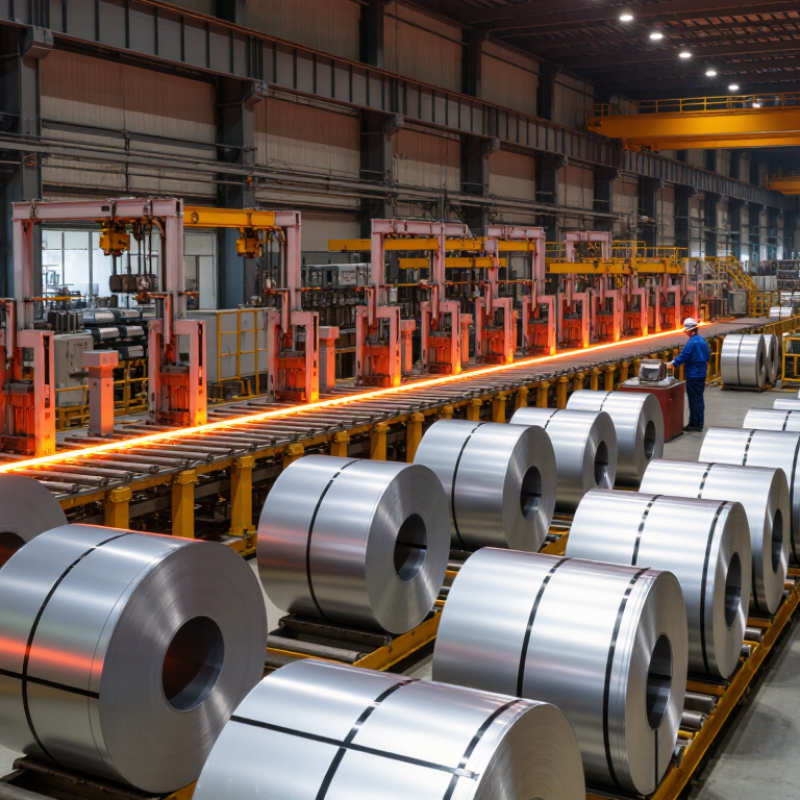
Top 10 Galvanized Plate Manufacturers Worldwide?

Definition and Global Role of Galvanized Plates

Galvanized plates are steel sheets protected by a zinc coating. The zinc creates a physical barrier and sacrifices itself when the surface is scratched. This dual protection helps slow rust in humid, coastal, and industrial environments. The World Steel Association reported nearly 1.89 billion tonnes of crude steel production in 2023. A significant share enters corrosion-sensitive sectors, including buildings, vehicles, agricultural equipment, and solar structures. Galvanized plates therefore support infrastructure durability, not merely surface appearance.

Their global role is practical and economic. Longer service life can reduce repainting, replacement, and maintenance interruptions. Industry data from the International Zinc Association indicates that galvanizing represents a major portion of global zinc use, often estimated near half of annual demand. Yet this figure varies by region and reporting method. That uncertainty deserves attention. Plate performance depends on coating mass, steel chemistry, forming methods, drainage design, and exposure conditions. A thick coating alone cannot correct poor detailing.

Tips: Check coating mass, plate thickness, and edge protection before purchasing. Refer to recognized specifications such as ASTM A653 or EN 10346. For outdoor projects, inspect cut edges and trapped-water areas. Small details matter. Request mill certificates and independent test results when corrosion risk is high. Also, avoid assuming every galvanized plate performs equally; fabrication damage, storage moisture, and local pollutants can shorten its useful life.
Key Criteria for Comparing International Manufacturers

Comparing the top ten galvanized plate manufacturers requires more than checking production volume. Real purchasing decisions begin with consistent evidence. Request recent mill test certificates showing yield strength, tensile strength, thickness, width, and coating mass. Samples should match the quoted grade and finish. An experienced evaluator also checks flatness with a straightedge and measures coating thickness at several points. One reading is not enough. Look for calibrated instruments, documented inspection plans, and clear records of rejected coils. These details reveal whether quality is built into the process or merely described by sales teams.

Factory capacity matters, but usable capacity matters more. Compare monthly output, minimum order quantities, changeover time, packing methods, and delivery performance across different seasons. Ask how the manufacturer handles edge damage, oil stains, uneven spangles, and delayed vessels. Photos help. An on-site audit, when practical, can verify storage conditions, crane handling, and moisture protection. Independent certifications add confidence, yet certificates should be checked for scope, date, and issuing body. Environmental data also deserves scrutiny, including energy sources, water treatment, and recycling claims. Not every factory will score highest on every measure. A smaller supplier may offer tighter communication, while a larger one may provide stronger continuity. That trade-off is easy to overlook. Price should remain only one line in the comparison sheet. Unexpected variation still happens. Reliable buyers leave room for it.

Top Galvanized Plate Manufacturers by Production Region

Top 10 Galvanized Plate Manufacturers Worldwide?

Top Galvanized Plate Manufacturers by Production Region

A regional comparison gives buyers a clearer view of galvanized plate production. The top ten manufacturers are not judged by volume alone. Capacity matters, but coating consistency matters more. Asia remains a major production center, supported by large hot-dip galvanizing lines and integrated steelworks. Many facilities supply construction, automotive, appliance, and infrastructure projects. Buyers should inspect zinc coating weight, surface finish, plate thickness, and delivery records.

Europe is known for tighter process control and specialized steel grades. Regional producers often focus on corrosion resistance, low-carbon materials, and demanding engineering applications. North American manufacturers commonly serve local construction and energy markets. Their strengths may include shorter delivery routes, established testing systems, and customized dimensions. India and the Middle East are also expanding production, especially near growing infrastructure corridors. Location can reduce freight costs. It can also shorten project delays.

A reliable top-ten assessment should use audited capacity, laboratory results, quality certifications, and customer references. Factory visits can reveal details that brochures omit, such as uneven coating near edges or poor packaging protection. Small defects matter. Public production figures are sometimes outdated, so rankings should remain flexible. This is an imperfect method, but it is more useful than comparing advertised output alone. Buyers should also review minimum order quantities, export experience, and technical support before selecting a regional supplier.

Product Quality, Standards, and Manufacturing Capabilities

Top 10 Galvanized Plate Manufacturers Worldwide?

Evaluating leading galvanized plate manufacturers requires more than comparing production volume. Product quality begins with consistent base steel, controlled rolling, and a uniform zinc coating. Experienced plants monitor coating mass, thickness, flatness, and surface appearance throughout production. Small edge defects can later become serious corrosion points.

Reliable manufacturers usually work under ISO 9001 quality systems and publish test results aligned with standards such as ASTM A653 or EN 10346. Their laboratories test coating adhesion, tensile strength, yield strength, and chemical composition. Each batch should have traceable heat numbers, inspection records, and clear mill certificates. This evidence supports engineers, fabricators, and purchasing teams during technical reviews.

Manufacturing capability also matters. Modern galvanizing lines control bath temperature, zinc chemistry, wiping pressure, and cooling speed. Automated gauges can detect uneven coating thickness within seconds. Some facilities offer customized coating masses, narrow thickness tolerances, cut-to-length plates, and corrosion-resistant finishing treatments. These services reduce waste on construction sites.

Standards are not everything. A perfect certificate may not reveal handling damage, poor storage, or weak packaging. Independent sampling remains useful, especially for large orders. I would also inspect plate edges, stacking methods, and surface marks before acceptance. These practical checks are sometimes overlooked. That is an avoidable weakness. Supplier communication matters too, because technical claims should match actual production records and delivery conditions.

Top 10 Galvanized Plate Manufacturers Worldwide? - Product Quality, Standards, and Manufacturing Capabilities
Rank Manufacturer Code Primary Production Region Typical Product Range Common Product Standards Typical Zinc Coating Range Typical Thickness Capability Typical Width Capability Manufacturing Capabilities Quality and Testing Focus Overall Assessment
1 Manufacturer A East Asia Hot-dip galvanized steel plate, coil, automotive and construction grades ASTM A653/A653M EN 10346 JIS G3302 Approximately Z100–Z600 / G30–G210 Approximately 0.25–3.2 mm Up to approximately 1,880 mm Continuous hot-dip galvanizing, skin-pass rolling, tension leveling, slitting, cut-to-length and coil coating Coating-mass verification, surface inspection, tensile testing, bend testing, dimensional control and weldability checks Very high product consistency and broad grade coverage
2 Manufacturer B Western Europe Galvanized and galvannealed sheet for construction, appliances and automotive applications EN 10346 EN 10143 ISO 3575 Approximately Z100–Z600 Approximately 0.40–3.0 mm Up to approximately 1,850 mm Continuous galvanizing, galvannealing, differential coating control, temper rolling, surface finishing and precision recoiling Automated coating control, surface roughness measurement, mechanical testing, corrosion evaluation and traceability systems Very high surface quality and strong automotive-grade capability
3 Manufacturer C North America Structural, commercial, roofing and manufactured-product galvanized sheet ASTM A653/A653M ASTM A924/A924M CSA G40.21 Approximately G30–G235 Approximately 0.30–3.4 mm Up to approximately 1,830 mm Continuous hot-dip galvanizing, high-strength low-alloy production, temper passing, slitting and customized packaging Coating-weight testing, yield and tensile testing, coating adhesion, flatness measurement and dimensional inspection Strong compliance with North American structural and commercial requirements
4 Manufacturer D East Asia General-purpose galvanized sheet, high-strength steel and prepainted substrate JIS G3302 EN 10346 ASTM A653/A653M Approximately Z80–Z600 / G30–G210 Approximately 0.30–2.6 mm Up to approximately 1,850 mm Continuous galvanizing, high-strength steel processing, skin-pass rolling, surface treatment and color-coating preparation Coating uniformity, surface appearance, forming performance, dimensional accuracy and batch traceability Broad export-oriented product portfolio and reliable process control
5 Manufacturer E South Asia Galvanized coils and plates for roofing, fabrication, infrastructure and appliances IS 277 ASTM A653/A653M EN 10346 Approximately Z80–Z550 / G30–G190 Approximately 0.25–3.0 mm Up to approximately 1,600 mm Continuous hot-dip galvanizing, coil slitting, cut-to-length, corrugation support and prepainted-steel substrate production Zinc-coating mass, adhesion, bend resistance, surface finish, thickness control and certificate-based inspection Competitive production capability with strong construction-market coverage
6 Manufacturer F Southern Europe Galvanized flat steel for construction, industrial components and cold-forming applications EN 10346 EN 10143 ISO 9001 Approximately Z100–Z450 Approximately 0.35–2.5 mm Up to approximately 1,600 mm Continuous galvanizing, cold-forming grades, skin-pass processing, slitting and custom coil preparation Dimensional tolerances, surface classification, coating adhesion, mechanical properties and production traceability Good European-standard compliance and dependable forming performance
7 Manufacturer G East Asia Galvanized plate for construction, machinery, electrical cabinets and general fabrication GB/T 2518 ASTM A653/A653M JIS G3302 Approximately Z60–Z600 / G20–G210 Approximately 0.20–3.0 mm Up to approximately 1,880 mm Continuous hot-dip galvanizing, spangle control, temper rolling, slitting, recoiling and container-loading support Coating mass, surface appearance, tensile properties, bend performance, thickness and width tolerances Flexible production range and strong high-volume manufacturing capability
8 Manufacturer H Oceania Galvanized sheet and coil for roofing, walling, structural products and roll forming AS 1397 AS/NZS 1365 ISO 9001 Approximately Z100–Z450 Approximately 0.30–2.5 mm Up to approximately 1,600 mm Continuous galvanizing, roll-forming support, cut-to-length, slitting and building-product substrate preparation Coating designation, dimensional tolerances, corrosion-resistance requirements, surface quality and product certification Well suited to building-envelope and regional infrastructure applications
9 Manufacturer I Middle East Galvanized steel for construction, HVAC, ducting, roofing and industrial fabrication ASTM A653/A653M EN 10346 ISO 3575 Approximately Z80–Z350 / G30–G120 Approximately 0.30–2.5 mm Up to approximately 1,500 mm Continuous galvanizing, slitting, cut-to-length, leveling and service-center processing Coating-weight measurement, thickness control, flatness, surface inspection and third-party or customer-specific testing Practical regional supply capability with emphasis on construction products
10 Manufacturer J Latin America Galvanized plate and coil for civil construction, agricultural buildings and general industry ASTM A653/A653M ABNT NBR 7008 ISO 9001 Approximately Z100–Z350 / G30–G120 Approximately 0.35–2.7 mm Up to approximately 1,600 mm Continuous hot-dip galvanizing, slitting, leveling, cut-to-length and support for corrugated-steel production Coating mass, mechanical properties, dimensional accuracy, bend testing, visual inspection and batch documentation Reliable regional production for standard construction and industrial grades
Data basis: The comparison uses internationally recognized galvanized-steel standards and typical published capability ranges. Actual thickness, width, coating designation, mechanical properties and available certifications vary by production line, steel grade, order quantity and market.

Market Applications and Factors Influencing Manufacturer Selection

Top 10 Galvanized Plate Manufacturers Worldwide: Market Applications and Selection Factors

Galvanized plate supports construction, automotive panels, HVAC equipment, agriculture, and solar structures. World Steel Association reports 1.84 billion tonnes of crude steel production in 2024. This scale keeps coated steel strategically important. The International Zinc Association estimates galvanizing consumes roughly 60% of global zinc output. Demand is strong, but supply quality differs.

A credible top-ten comparison should examine coating mass, steel grade, thickness tolerance, and forming performance. ASTM A653 and EN 10346 provide useful reference points. Roofing may require consistent coating coverage, while automotive parts need clean surfaces and precise stamping behavior. Infrastructure projects also need documented corrosion testing. Location still matters. Freight distance can affect delivery time, emissions, and total cost. Ask for mill certificates, independent inspection records, and batch traceability. A factory with high output is not automatically the best choice.

During supplier evaluation, inspect edge quality, surface uniformity, packaging, and storage protection. Salt-spray results can help, but they should not replace real exposure data. The World Steel Association’s climate reporting also makes energy use and emissions relevant selection factors. However, carbon figures are not always comparable. Reporting boundaries may differ. That weakness deserves attention. A low quoted price can hide slower lead times, inconsistent coating weight, or expensive rejection rates. Measure twice. Choose production reliability over impressive capacity alone.

Top 10 Galvanized Plate Manufacturers Worldwide? – Market Applications and Factors Influencing Manufacturer Selection

Galvanized steel coating classes are commonly specified by nominal zinc coating mass in accordance with EN 10346. Higher coating mass generally provides greater zinc availability for corrosion protection, although service life also depends on exposure, forming, edge protection, and product design.

Selection insight: Z100–Z200 coatings are often used for lighter indoor or moderately protected applications, while Z275–Z600 coatings are more suitable for demanding exterior, infrastructure, agricultural, and industrial environments. Buyers typically compare coating class, steel grade, surface quality, dimensional consistency, certification, delivery capability, and total cost.