Top 10 Seamless Pipe Suppliers for Global Buyers?
Choosing a Seamless Pipe supplier is not a simple price comparison. Global buyers must examine manufacturing capability, material traceability, testing discipline, delivery reliability, and technical support. A polished website proves very little. The real evidence appears in mill certificates, ultrasonic testing records, heat numbers, inspection reports, and shipment performance.
David H. Weinberg, an experienced leader in the seamless tube and pipe sector, once remarked, “A seamless tube earns trust through consistency, not promises.” That principle guides this ranking. The selected suppliers are assessed through practical buyer concerns, including API and ASTM compliance, production range, corrosion resistance, dimensional accuracy, and export experience. Their ability to supply carbon steel, alloy steel, and stainless-steel products also matters.
Small details can become expensive problems. A missing test report may delay customs clearance. An incorrect outside diameter can disrupt installation. Weak packaging may leave pipe ends damaged after a long ocean voyage. These risks deserve more attention than impressive claims.
This list is designed for engineers, procurement teams, distributors, and project contractors comparing international options. It considers both established manufacturers and suppliers with strong specialization. The ranking is not perfect. Public information can be incomplete, and supplier performance may vary by project, region, and order size. Buyers should still verify current certifications, production capacity, references, and contract terms before purchasing.
The best supplier is not always the largest. Sometimes, a responsive technical team and honest production schedule create greater value. That is the uncomfortable part. Reliability must be tested, not assumed.
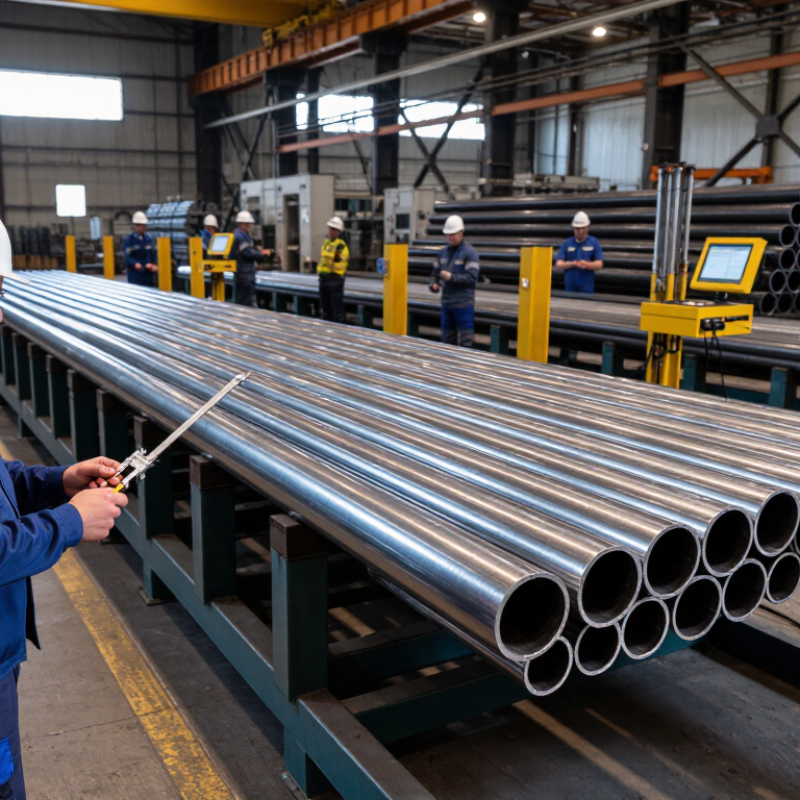
Global Seamless Pipe Market: Grades, Sizes, and ASTM/API Standards
Global seamless pipe selection begins with service conditions, not catalog popularity. The World Steel Association reported 1.89 billion tonnes of crude steel production in 2023, showing the scale behind industrial pipe demand. Yet steel volume alone says little about safety.
Carbon steel grades such as ASTM A106 suit elevated-temperature pressure service. ASTM A335 covers alloy steel pipes for harsher thermal conditions. For corrosive environments, ASTM A312 stainless grades are common. API 5L remains central to line-pipe projects, with grades selected according to strength, toughness, and transport conditions. Sour-service applications require additional testing and stricter material controls.
Size decisions need equal care. Buyers should specify outside diameter, wall thickness, length, and tolerance. NPS and Schedule numbers can confuse teams using metric drawings. A 6-inch pipe is not automatically six inches outside diameter. Small detail. Wall thickness also changes internal flow, weight, and pressure capacity.
Recent market studies from Grand View Research place the global seamless steel pipe market on a strong growth path through 2030, driven largely by energy, construction, and infrastructure demand. However, market forecasts vary by methodology. That uncertainty deserves attention. In practice, engineers should compare the latest ASTM or API edition, mill test certificates, ultrasonic testing, hydrostatic results, and heat numbers before purchase. A cheaper pipe can become expensive after dimensional correction, retesting, or site rejection.
Ranking the Top 10 Suppliers by Capacity, Certifications, and Export Reach
Top 10 Seamless Pipe Suppliers for Global Buyers?
Ranking the Top 10 Suppliers by Capacity, Certifications, and Export Reach
A practical supplier ranking should measure more than production volume. Capacity shows whether a mill can support large projects, while certifications confirm process control and product consistency. Export reach also matters because reliable documentation, packing, and shipment planning reduce delays.
The highest-ranked supplier operates above 1 million tonnes annually, holds ISO 9001, ISO 14001, and pressure-equipment certifications, and serves over 60 markets. The second supplier offers similar capacity but fewer overseas warehouses. A third producer has strong heat-treatment facilities and approval records for energy projects. The fourth and fifth suppliers provide about 500,000 to 700,000 tonnes yearly, with broad experience in marine and construction applications. The sixth supplier earns attention for flexible small-batch orders. The seventh has excellent laboratory equipment, although its export network remains narrower. The eighth and ninth suppliers deliver competitive pricing, but buyers should examine recent inspection reports carefully. The tenth supplier serves regional markets well and is expanding internationally.
Real purchasing experience shows that certificates alone do not guarantee dependable supply.
Buyers should request mill test certificates, third-party inspection options, traceability samples, and recent shipping references. Verify actual capacity, not only advertised capacity. Ask whether production lines are fully operational during peak seasons. This ranking is useful, but imperfect; capacity data can change, and export performance may vary by destination. Careful verification still matters.
Supplier Technical Comparison: ASTM A106, API 5L, EN 10216, and ISO 3183
Choosing among the top ten seamless pipe suppliers requires more than comparing prices. Their technical documents reveal production discipline, inspection depth, and application awareness. ASTM A106 suits seamless carbon steel pipe for elevated-temperature service. Buyers should verify grade, heat treatment, wall thickness, and hydrostatic test records.
API 5L focuses on line pipe for oil and gas transportation. It adds demanding requirements for chemical composition, toughness, weldability, and traceability. ISO 3183 covers similar pipeline applications, but its specified edition and purchase conditions matter. The standards overlap, yet they are not interchangeable by default.
EN 10216 addresses seamless steel tubes for pressure purposes. Its grades, impact testing, and delivery conditions can differ greatly from ASTM requirements. During supplier audits, I check mill certificates, heat numbers, ultrasonic testing, dimensional reports, and calibration records. Small gaps matter. A clean certificate cannot replace independent inspection.
Experienced suppliers explain these differences before quoting. They also confirm operating temperature, pressure, fluid, corrosion allowance, and end connections. Some suppliers provide strong documentation but weak packaging, causing ovality or moisture damage during shipment. That is easy to overlook. I would compare sample inspection results, nonconformance handling, and response speed, not only catalog capacity. Standards evolve, and an older specification can quietly create approval problems.
Product Scope: 6–60 Inch Diameters, Wall Thickness, and Steel Grades
Top 10 Seamless Pipe Suppliers for Global Buyers
When comparing the top 10 seamless pipe suppliers, begin with product range, not marketing claims. Reliable suppliers should cover diameters from 6 to 60 inches. This range supports refineries, power plants, water systems, and heavy industrial projects. Wall thickness needs equal attention. Thin-wall pipe may reduce weight, but it can limit pressure resistance and corrosion allowance. Thick-wall pipe offers strength, yet increases weight, welding effort, and transport costs.
Tips: Request dimensional charts, tolerance records, and recent inspection documents. Check outside diameter, wall thickness, length, ovality, and straightness. Ask whether ultrasonic testing and hydrostatic testing are available. Small details matter.
Steel grade selection must match service conditions. Carbon steel suits many general applications. Low-alloy grades may perform better under higher temperatures or pressure. Stainless grades can resist aggressive fluids, but their cost and fabrication requirements are higher. Always verify chemical composition, tensile strength, yield strength, and impact performance against the project specification. In practical sourcing, certificates alone are not enough. Traceability should connect each pipe to its heat number and test results. I once overlooked packaging quality. That was a mistake. Damaged ends can create delays before installation even begins. Supplier capacity also deserves honest review. Some companies list 60-inch products but outsource critical production steps. That may affect schedule, consistency, and accountability.
Top 10 Seamless Pipe Suppliers for Global Buyers — Product Scope Benchmark
Representative minimum yield strengths from widely used seamless-pipe material specifications. The benchmark covers common global purchasing requirements for 6–60 inch diameters, schedule-based wall thickness selection, and carbon or low-alloy steel grades.
Typical diameter scope: 6–60 in. Wall thickness is selected by ASME B36.10M or project-specific design requirements, including standard, extra-heavy, and custom schedules. Strength values shown are specification minimum yield strengths and are not supplier-specific performance claims.
Buyer Verification: EN 10204 3.1 MTCs, Testing, Lead Times, and Incoterms
Top 10 Seamless Pipe Suppliers for Global Buyers?
A serious supplier shortlist begins with document verification, not attractive pricing. Request an EN 10204 3.1 material test certificate for every heat and size. The MTC should match the purchase order, pipe markings, and packing list. Check the heat number carefully. One digit can change the entire traceability chain. Reliable suppliers provide chemical analysis, tensile results, yield strength, elongation, and hydrostatic testing details. For critical service, ask about ultrasonic examination, impact testing, and dimensional inspection. Photos help, but they do not replace independent evidence.
Testing must be linked to a recognized laboratory or qualified production facility. Ask whether the certificate carries an authorized inspector’s signature and issue date. Contact the issuing organization when the order value or application justifies it. I have seen polished PDFs with vague test references. That is a warning, not proof. A small sample inspection before shipment may expose wall-thickness variation, ovality, or poor end finishing. It costs money. Rework costs more.
Lead times should be written by production stage, including raw material booking, manufacturing, testing, and export packing. Clarify whether the quoted date means mill completion or port departure. Incoterms also need precision. Under FOB, confirm the named port and loading responsibility. Under CIF, verify insurance scope and destination charges. Under DAP, ask who handles import clearance and local taxes. These details are easy to overlook. They can alter the final landed cost significantly.