Leave Your Message

Why Choose Galvanized Coil for Global Sourcing?

Global buyers are reassessing material choices as steel demand, freight costs, and supply risks continue to shift. The World Steel Association’s World Steel in Figures 2024 reports approximately 1.89 billion tonnes of crude steel production in 2023. That scale supports a broad supplier base for Galvanized Coil. It also creates more room for qualification, price comparison, and regional sourcing.

Zinc protection is the practical advantage. A continuous coating helps shield the steel surface from moisture, scratches, and early corrosion during transport and service. The USGS Mineral Commodity Summaries 2025 estimates global zinc mine production at roughly 12 million metric tons in 2024. This supply remains substantial, although zinc prices and availability can still change quickly. Buyers should not treat every coil as equivalent.

Coating mass matters. So do yield strength, thickness tolerance, surface finish, and edge condition. A coil marked Z275 is not interchangeable with one marked Z120. Standards such as EN 10346 and ASTM A653 support clearer technical communication, while mill test certificates and independent inspections strengthen purchasing decisions. Small details matter here. A wet container, damaged wrapping, or unclear coating test can create expensive downstream problems.

Galvanized Coil can reduce repainting needs and simplify fabrication for roofing, automotive components, ductwork, and general construction. Yet it is not automatically the cheapest choice. Forming requirements, zinc premiums, minimum order quantities, and delivery distance may change the final landed cost. Global sourcing works best when buyers compare verified quality, total logistics cost, and supplier performance—not only the quoted price.

Why Choose Galvanized Coil for Global Sourcing?

What Is Galvanized Coil and How Is It Made?

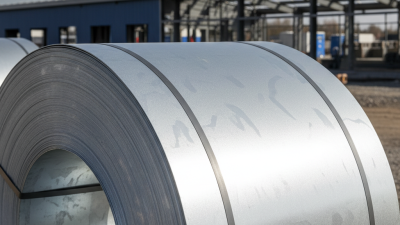
Galvanized coil is steel coated with a protective layer of zinc. Most industrial coils begin as cold-rolled steel, cleaned to remove oil, scale, and surface dust. The strip then passes through a molten zinc bath, usually near 450°C. Zinc bonds with the steel and forms protective alloy layers beneath the outer coating.

Air knives control the coating thickness as the strip leaves the bath. Cooling equipment solidifies the zinc surface quickly. The line may then use skin-pass rolling, tension leveling, and recoiling to improve flatness and appearance.

Small differences matter. A stable line speed can affect coating weight, surface finish, and final dimensions.

In practical sourcing, buyers should check the steel grade, coil thickness, width, zinc coating mass, and tolerances. Test reports should match the delivered material, not only the purchase order. Visual inspection can reveal bare spots, edge damage, excessive spangle, or uneven coating. Packaging also deserves attention, especially for long sea journeys where moisture can cause white rust.

The process sounds simple. It is not.

Galvanized coil performs well because zinc protects exposed steel areas through sacrificial action. However, it is not immune to poor storage or unsuitable forming conditions. Sharp bending, trapped moisture, and incompatible chemicals may reduce service life. A reliable specification should consider the intended fabrication method, climate, transport route, and inspection requirements before shipment.

Key Properties That Support Global Industrial Use

Why Choose Galvanized Coil for Global Sourcing?

Galvanized coil offers a practical balance of corrosion resistance, strength, and processing flexibility. Its zinc coating protects exposed steel through barrier and sacrificial action. Moisture is unforgiving. The American Galvanizers Association reports expected service lives exceeding 100 years in rural environments, about 70 years in suburban areas, and around 20 years in marine conditions. These figures depend on coating thickness, exposure, and maintenance.

For international procurement, consistency matters as much as durability. ASTM A653/A653M and EN 10346 define coating designations, mechanical properties, and dimensional requirements. Buyers should verify coating mass, yield strength, elongation, coil width, and surface finish before shipment. A certificate alone is not enough. Independent testing can confirm coating weight and tensile performance at receiving. The World Steel Association reported global crude steel production at approximately 1.89 billion tonnes in 2023, showing the scale of steel supply chains and the importance of standardized specifications.

Galvanized coil also supports roll forming, stamping, roofing, ventilation, and agricultural equipment production. Its zinc layer can reduce repainting and replacement needs, which may lower lifecycle costs. However, not every coating suits every climate. Salt exposure, cut edges, trapped moisture, and warehouse condensation still create risks. That assumption needs testing. A stronger sourcing plan links material grade, coating designation, packaging, transport conditions, and local atmospheric data. Buyers should also assess recyclability and embodied emissions, since the World Steel Association identifies steelmaking as responsible for roughly 7% to 9% of global carbon dioxide emissions.

Why Choose Galvanized Coil for Global Sourcing?

Key Properties That Support Global Industrial Use

Zinc coating designations indicate the nominal total coating mass on both sides of the steel sheet. Higher coating mass generally provides a greater zinc reserve for corrosion protection, while the appropriate grade depends on the exposure environment, forming requirements, and application standard.

Reference basis: EN 10346 coating designation values. Actual coating performance varies with environment, processing, forming, and maintenance.

Why Galvanized Coil Fits International Sourcing Strategies

Galvanized coil fits international sourcing strategies because it combines standardized steel dimensions with durable zinc protection. Buyers can compare thickness, width, coating mass, and mechanical grade across suppliers. This reduces specification confusion when orders cross borders. World Steel Association reported approximately 1.88 billion tonnes of crude steel production in 2024. That scale supports broader supplier selection and regional purchasing options. However, large supply does not guarantee consistent coating quality.

In practical sourcing, galvanized coil can simplify procurement for roofing, ductwork, appliances, and light structural parts. A shipment arrives with a metallic surface, measured coating, and documented test results. Traceability matters. The International Zinc Association notes that zinc protection can provide long service life, depending on coating thickness and exposure conditions. A coastal warehouse needs stricter corrosion planning than an inland factory. Packaging, container humidity, and transit time also affect surface quality.

Cost is only one variable. Freight distance, import duties, inspection standards, and currency changes can reshape the final price. Buyers should request mill certificates, coating test records, dimensional tolerances, and independent inspection when risk is high. It is not perfect. Some procurement teams assume galvanized coil needs no further protection, yet cut edges, forming damage, and trapped moisture can create weak points. A resilient international strategy keeps qualified alternatives, reviews supplier performance, and matches the coating specification to the actual operating environment.

How to Evaluate Suppliers, Coatings, Grades, and Specifications

Why Choose Galvanized Coil for Global Sourcing?

Choosing galvanized coil requires more than comparing the lowest quotation. The World Steel Association reported 1.892 billion tonnes of global crude steel production in 2023. That scale creates wide supplier choice, but also uneven quality. Begin with supplier evidence: recent mill certificates, coating test results, dimensional records, and traceable heat numbers. A factory audit should examine slitting, packaging, storage, and complaint handling.

Coating must match the service environment. Under ASTM A653/A653M, a G90 designation means 0.90 oz/ft² total coating on both surfaces. In metric terms, that is approximately 275 g/m², often shown as Z275 under EN 10346. Confirm whether the quotation states total coating mass or coating per side. Confusion here is common. Ask for triple-spot and single-spot test results, not only a sales declaration. The ISO 9223 corrosion-classification framework can also help connect exposure conditions with coating expectations, although it cannot replace project testing.

Steel grade and dimensions deserve equal attention. Verify yield strength, tensile strength, elongation, thickness tolerance, width tolerance, coil weight, and inner diameter. Request the applicable standard and inspection plan in writing. I have seen buyers accept a familiar grade without checking forming requirements. That mistake can cause edge cracking during stamping. Packaging also matters. Moisture trapped under damaged wrapping can produce white rust before the coil reaches the plant. Independent inspection is useful, but it is not perfect. Supplier history, transport records, and corrective-action evidence should still influence the final decision.

What to Consider in Quality Control, Shipping, and Compliance

Why Choose Galvanized Coil for Global Sourcing?

Galvanized coil can offer consistent corrosion protection, but quality depends on measurable details. In practical sourcing, buyers should confirm steel grade, thickness, width, coating mass, and coil weight. Small variations can create forming problems later. Request the mill test certificate and production traceability for every batch. Independent inspection is useful for high-value orders. Inspectors should check surface defects, edge damage, coating adhesion, tensile strength, and dimensional accuracy. Salt spray results can help, but they do not predict every real-world condition. A perfect checklist does not exist.

Shipping requires equal attention. Moisture is a common enemy. Condensation inside a container can stain the surface before unloading. Use suitable wrapping, waterproof protection, separators, and desiccant when the route and climate justify them. Secure coils against movement with rated restraints and proper blocking. Confirm the loading direction, axle limits, container weight, and port handling requirements. Photograph the cargo before closing the container. It sounds basic. It prevents arguments.

Compliance begins before production. Confirm the destination’s product standards, labeling rules, customs classification, origin documents, and environmental declarations. Requirements may differ by country and can change during a project. Ask for current certificates, chemical disclosures, and inspection records rather than relying on old files. Keep heat numbers linked to packing lists and invoices. I have seen paperwork treated as an afterthought, and that can delay otherwise acceptable cargo. Supplier capability matters, but documented controls matter more. Review the process honestly, including what still needs improvement.

Why Choose Galvanized Coil for Global Sourcing? - What to Consider in Quality Control, Shipping, and Compliance

Dimension Key Specification or Indicator Practical Quality-Control Requirement Global Sourcing Consideration Reference
Base Steel Grade Commercial forming steel, drawing steel, or structural steel Confirm the mechanical properties, yield strength, tensile strength, elongation, and chemical composition against the purchase specification. Use the grade appropriate for the final application; forming grades generally require tighter control of elongation and surface quality than structural grades. ASTM A653/A653M; EN 10346
Coating Type Hot-dip galvanized zinc coating Verify coating designation, coating adhesion, surface uniformity, and the absence of exposed bare steel, excessive zinc buildup, or harmful surface defects. Hot-dip galvanizing provides a sacrificial zinc layer that protects exposed steel from corrosion, subject to the environment and coating mass. ASTM A653/A653M; EN 10346
Coating Mass Common designations include Z120, Z180, and Z275 Coating mass is normally specified as the total zinc mass on both surfaces. The applicable standard and test method should be stated in the contract. Z275 corresponds approximately to 275 g/m² total coating mass, or about 0.90 oz/ft², when the relevant conversion is used. EN 10346; ASTM A653/A653M
Coating Thickness Approximate total coating thickness depends on coating mass Do not substitute a nominal thickness calculation for the required coating-mass test. Measure according to the governing standard. For reference, 275 g/m² total zinc mass is approximately equivalent to 0.039 mm total zinc thickness when zinc density is taken as about 7.14 g/cm³. Calculation based on zinc density; standard test method governs
Dimensional Tolerance Thickness, width, inner diameter, outer diameter, and flatness Use calibrated micrometers, width gauges, coil-diameter checks, and sampling plans. Record measurements by coil number. Confirm whether tolerances are based on the base-metal thickness or the coated thickness, because this can affect production and downstream processing. ASTM A568/A568M; EN 10143
Surface Finish Regular spangle, minimized spangle, or spangle-free finish Define acceptable levels for scratches, roll marks, dents, edge damage, stains, wet-storage oxidation, and passivation marks. Surface appearance requirements should be linked to the end use, especially for exposed architectural, automotive, or appliance applications. EN 10346; ASTM A653/A653M
Mechanical Properties Yield strength, tensile strength, elongation, and bend performance Review the material test certificate and perform independent verification when required by contract, risk level, or regulatory requirements. Higher-strength grades can reduce material weight but may require different forming equipment, tooling, and bend-radius controls. ASTM A653/A653M; EN 10346
Coil Weight and Packaging Weight and eye orientation must be agreed before shipment Check coil ID, OD, net weight, gross weight, banding, edge protection, waterproof wrapping, and skid or cradle condition. Specify eye-to-sky or eye-to-side orientation and ensure packaging is suitable for lifting, container loading, and long-distance handling. Purchase specification and carrier requirements
Moisture Protection Dry storage and prevention of wet-storage stain Inspect packaging for water ingress. Keep coils dry, ventilated, and separated from condensation sources during storage and transit. Temperature changes inside containers can cause condensation; moisture-resistant wrapping and desiccant planning may be necessary for humid routes. Industry handling practice; supplier packaging specification
Container and Inland Transport Payload, axle limits, lifting points, and cargo securing Confirm the route-specific payload limit, container internal dimensions, lifting method, blocking, bracing, and anti-roll protection. Actual allowable cargo weight varies by vessel, container type, road regulations, rail rules, and destination-country axle limits. Carrier instructions; applicable national transport regulations
Shipping Documents Commercial invoice, packing list, bill of lading, certificate of origin, and mill test certificate Match coil numbers, weights, dimensions, grade, coating designation, and package counts across all documents. Accurate documentation reduces customs delays, invoice disputes, and difficulties tracing material to a specific production batch. Customs and contract documentation requirements
Customs Classification HS classification depends on product form, coating, width, thickness, and destination rules Obtain a classification review from the importer or customs broker before shipment rather than relying only on a supplier estimate. Incorrect classification may affect duty, quota treatment, trade remedies, origin declarations, and customs clearance time. Destination customs authority; current HS schedule
Country of Origin Origin is determined under applicable customs rules Retain production records, mill certificates, and origin documents that support the declared country of origin. Origin requirements can influence tariffs, trade restrictions, government procurement eligibility, and customer reporting obligations. Destination-country customs regulations
Chemical Compliance Substance restrictions may apply to steel, zinc, passivation, oil, and packaging materials Request declarations or test reports covering restricted substances relevant to the destination market and end application. Requirements vary by jurisdiction and sector; automotive, construction, electrical, and consumer-product applications may have additional controls. Applicable national chemical and product regulations
Quality Records Traceability by heat, coil, batch, and inspection report Require material test certificates, coating test results, dimensional records, photographs, and nonconformance reports when applicable. Traceability supports claims management, root-cause analysis, and consistent replenishment from future purchase orders. ISO 9001 quality-management principles; contract requirements
Pre-Shipment Inspection Document review plus visual, dimensional, and packaging inspection Inspect a defined sample or every coil according to risk. Record findings against agreed acceptance criteria before release. Independent inspection is especially useful for first orders, new supply routes, high-value cargo, and tight surface or coating requirements. Agreed inspection and sampling plan
Storage After Arrival Indoor, dry, ventilated storage with stable support Store coils off the floor, avoid contact with standing water, maintain package integrity, and use stock rotation. Long storage periods increase the risk of moisture staining, edge corrosion, packaging damage, and deformation from improper support. Manufacturer handling guidance; warehouse procedures
Acceptance Criteria Must be defined before production Specify grade, thickness, width, coating designation, tolerances, surface class, coil weight, packaging, documents, and claim procedure. A written specification prevents different interpretations of “prime quality,” “commercial quality,” and acceptable cosmetic variation. Purchase contract and applicable product standard