Leave Your Message
Why Choose Hot Rolled Plate for Global Projects?
Global construction and infrastructure projects demand materials that can handle distance, pressure, and changing conditions. Hot Rolled Plate remains a practical choice for many of these applications. It is formed at high temperatures, which supports efficient production and broad size availability. Its rough surface and visible mill scale may seem unrefined. Yet those features often suit bridges, heavy machinery, shipbuilding, storage tanks, and structural frameworks.
As Edwin Basson, Director General of worldsteel, has said, “Steel is the backbone of modern society.” That statement reflects the material’s continuing role in industrial development. Hot Rolled Plate offers strong load-bearing performance, dependable weldability, and flexible fabrication options. Engineers can cut, bend, drill, and weld it for different project requirements. Its supply chain is also well established across major steel-producing regions. This can simplify sourcing for international contractors.
Still, hot rolled steel is not perfect. Its dimensional tolerances may be less precise than cold rolled products. Its surface usually needs treatment before decorative use or demanding corrosion protection. Project teams must review thickness, grade, inspection records, and delivery conditions carefully. Weather exposure during transport can also leave rust stains or scale. That detail is easy to overlook.
A reliable decision begins with the actual service environment. Consider load, temperature, welding methods, coating needs, and local standards. Choose Hot Rolled Plate because it fits the project, not because it is familiar. In global work, practical performance matters more than polished appearances.
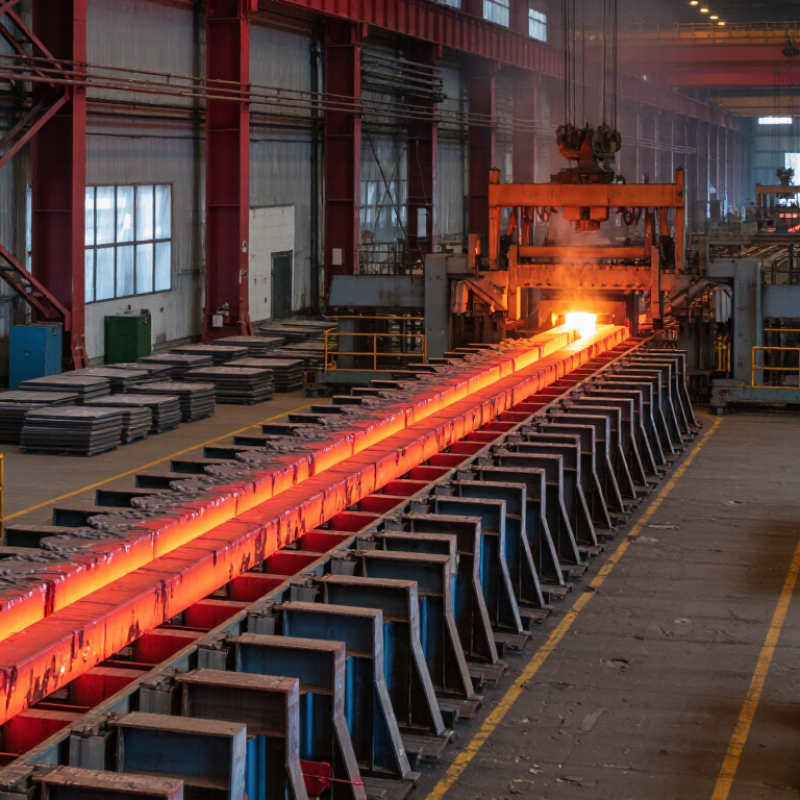
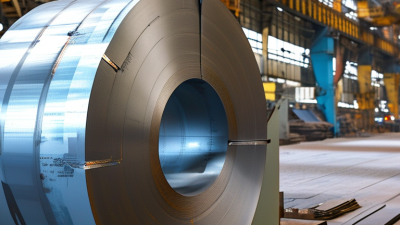
Hot rolled plate is steel shaped at high temperature, usually above its recrystallization range. Large slabs enter a rolling mill while they remain red-hot. Powerful rollers reduce the slab’s thickness and extend its length. The process creates practical plate sizes for bridges, vessels, machinery, and energy infrastructure.
Manufacturing begins with controlled heating in a furnace. Temperature must stay consistent across the slab. Uneven heating can cause scale, distortion, or internal stress. After roughing passes, finishing stands achieve the required thickness. Water sprays cool the plate and help control its final properties. The plate may then receive cutting, leveling, shot blasting, or edge preparation.
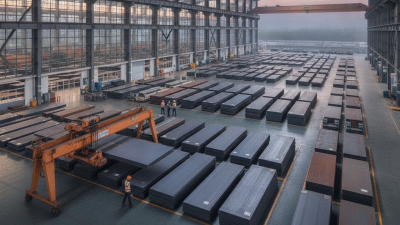
Quality depends on more than appearance. Producers check dimensions, surface condition, chemical composition, tensile strength, and impact performance. Traceable test certificates support inspection teams working across different countries. Ultrasonic testing can identify internal discontinuities when project specifications require it. In practice, hot rolled plate is not perfectly flat after cooling. Minor surface variation can remain. That detail matters during welding and assembly. Engineers should confirm tolerances before fabrication, rather than trust a visual inspection. This step is easy to overlook. Proper documentation, independent verification, and suitable storage also reduce risks from corrosion and handling damage.
| Data Dimension | Typical Technical Data | Manufacturing or Material Detail | Value for Global Projects |
|---|---|---|---|
| Product Definition | Hot rolled plate is a flat steel product manufactured by rolling heated steel slabs to the required thickness. | Rolling is performed above the steel’s recrystallization temperature, allowing substantial thickness reduction with lower forming force. | Suitable for structural frames, bridges, pressure-related equipment, heavy machinery, shipbuilding, and general fabrication. |
| Primary Raw Material | Steel slab produced by continuous casting or, less commonly, by ingot-based steelmaking. | The slab is chemically analyzed and inspected before reheating and rolling. | Standardized slab production supports consistent procurement from qualified mills in different regions. |
| Reheating Temperature | Typically about 1,100–1,250°C, depending on steel grade, slab thickness, and mill practice. | The slab is heated uniformly in a walking-beam or similar industrial furnace before roughing. | Controlled reheating improves shape control and supports efficient rolling of large cross-sections. |
| Rolling Process | Roughing passes reduce the slab thickness, followed by finishing passes that establish final dimensions and surface profile. | Modern plate mills use hydraulic roll-gap control, temperature monitoring, and automatic gauge control. | Process automation helps achieve repeatable dimensions for projects requiring multiple plate lots. |
| Typical Thickness | Commonly supplied from approximately 6 mm to more than 100 mm; the available range depends on the mill and specification. | Heavy plates may require additional rolling passes, controlled cooling, or heat treatment. | Broad thickness availability allows one product family to cover light structural parts and heavy load-bearing components. |
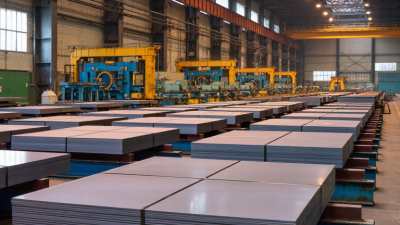
| Typical Width and Length | Widths commonly range from about 1,500 mm to over 3,000 mm, with cut lengths selected according to mill capacity and project requirements. | Plates may be supplied as standard mill sizes or cut to length after inspection. | Large plate formats can reduce the number of welds, fabrication stages, and material handling operations. |
| Cooling Method | Air cooling, accelerated cooling, or controlled cooling may be used after rolling. | Cooling practice affects strength, toughness, microstructure, and residual stress. | Cooling control enables different performance levels while maintaining compliance with applicable standards. |
| Heat Treatment Options | Depending on the grade, plates may be supplied as rolled, normalized, normalized rolled, thermomechanically rolled, or quenched and tempered. | Heat treatment is selected to achieve specified strength, toughness, weldability, or hardness. | Engineers can match the material condition to climate, loading, thickness, and fabrication requirements. |
| Common Structural Grade Examples | Examples include ASTM A36, ASTM A572 Grade 50, EN 10025 S275, and EN 10025 S355. | Each grade has its own chemical, mechanical, impact, and dimensional requirements. | Recognized international specifications simplify design approval and cross-border material sourcing. |
| Yield Strength Reference | Typical structural grades range from approximately 235 MPa to 355 MPa minimum yield strength, depending on grade and thickness. | Actual minimum values may decrease at greater thicknesses under some standards. | Designers can select an appropriate strength level without automatically increasing plate thickness. |
| Tensile Strength Reference | Common structural plate grades may provide tensile strength of approximately 360–630 MPa, depending on the specification. | Certified test results are required to confirm the values for a specific heat and plate thickness. | Verified tensile performance supports structural calculations and quality documentation. |
| Surface Condition | Typical hot rolled surfaces may contain mill scale and may show minor roll marks or localized imperfections permitted by the governing standard. | Shot blasting, descaling, pickling, or surface grinding can be specified when required. | Surface preparation can be matched to painting, welding, corrosion protection, and visual quality requirements. |
| Dimensional Tolerances | Thickness, width, length, flatness, and edge straightness are controlled according to the ordered standard and tolerance class. | Applicable systems may include ASTM, EN, JIS, or other recognized national specifications. | Clearly defined tolerances improve interchangeability and reduce rework during fabrication. |
| Weldability | Many structural hot rolled plates are designed for welding, provided the carbon equivalent, thickness, heat input, and preheating requirements are considered. | Welding procedures should be qualified for the selected grade and service conditions. | Good weldability can shorten fabrication time and support local or international construction practices. |
| Quality Verification | Typical inspections include chemical analysis, tensile testing, impact testing when specified, dimensional checks, visual inspection, and ultrasonic testing when ordered. | Inspection requirements are stated in the purchase specification, applicable standard, and project quality plan. | Traceable inspection records help satisfy consultants, regulators, insurers, and project owners. |
| Traceability | Plates are commonly identified by heat number, plate number, grade, dimensions, and manufacturing condition. | Marking and mill certificates connect the delivered plate to its production and test records. | Reliable traceability supports audits, nonconformance control, and long-term asset documentation. |
| Main Advantages | High production efficiency, broad size availability, strong load-bearing capability, and competitive cost for large steel structures. | Hot rolling is well suited to high-volume production of thick and wide steel products. | A practical choice for global projects that require dependable performance, scalable supply, and straightforward fabrication. |
Note: The values shown are typical reference ranges only. Final mechanical properties, dimensions, tolerances, surface condition, inspection requirements, and delivery condition must be confirmed against the applicable material standard and project specification.