Leave Your Message

10 Best Metal Coils for Global Buyers?

Choosing the right Metal Coils supplier is rarely a simple price comparison. Global buyers must examine grade, thickness, width, coating, surface finish, and production consistency. A coil that looks flawless under warehouse lighting may reveal edge cracks after slitting. That small failure can delay an entire fabrication line.

Dr. Edwin Basson, Director General of the World Steel Association, has stated, “Steel is essential to modern life and supports sustainable development.” This perspective matters when evaluating Metal Coils for construction, automotive parts, roofing, appliances, and energy projects. Strength is important. So are recyclability, traceability, and dependable delivery.

This guide reviews ten strong Metal Coils options for international purchasing teams. It considers galvanized, galvalume, cold-rolled, hot-rolled, stainless steel, and pre-painted coils. Each type serves a different working environment. Salt air demands better corrosion resistance. Deep drawing needs reliable formability. Heavy structural work requires stable mechanical performance.

Price still matters. It should not lead every decision. A low-cost coil may bring hidden expenses through coating defects, uneven thickness, or inconsistent certificates. Buyers should request mill test reports, inspection records, sample data, and clear tolerance details. Supplier reputation also deserves practical testing, not blind trust.

The ranking is useful, but not perfect. Regional standards, freight conditions, and application risks can change the result. One buyer’s best coil may be another buyer’s costly mistake. Careful verification remains essential before signing a large order.
10 Best Metal Coils for Global Buyers?

Metal Coil Basics: Types, Grades, Coatings, and Common Applications

10 Best Metal Coils for Global Buyers?

Metal Coil Basics: Types, Grades, Coatings, and Common Applications

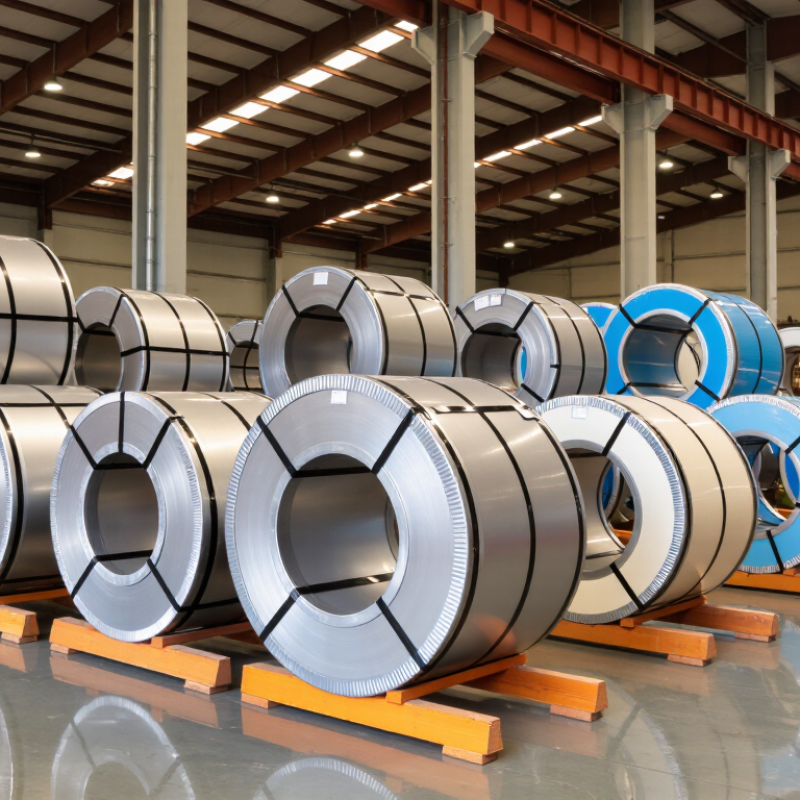
Metal coil is a continuous strip wound for transport, processing, and fabrication. Common choices include carbon steel, stainless steel, aluminum, galvanized steel, and galvalume steel. Each type suits different conditions. Carbon steel supports structural frames and automotive parts. Stainless steel resists corrosion in food, medical, and chemical environments. Aluminum offers low weight for roofing, transport, and ventilation systems.

Grade selection affects strength, formability, welding, and service life. Buyers should match the grade with the forming method and final use. A high-strength grade may reduce thickness, but it can create more difficult bends. That trade-off matters. Review yield strength, tensile strength, elongation, thickness tolerance, and coil weight before ordering. Request test certificates and verify the stated standards with an independent inspection when project risk is high.

Coatings provide another layer of protection. Zinc coatings help galvanized coil resist rust, while aluminum-zinc coatings support exposed roofing applications. Painted coils add color and improve weather resistance, but coating thickness and surface preparation require careful checking. Inspect edges, packaging, oil levels, and visible surface marks. I have seen specifications focus heavily on price while overlooking slitting width and minimum order weight. That mistake can create expensive production waste. Applications also vary by region, climate, equipment, and maintenance plans. A coastal project needs stricter corrosion planning than an indoor partition.
How to Compare the 10 Best Metal Coils for Global Purchasing

Choosing the 10 best metal coils for global purchasing requires more than comparing prices. Buyers should examine grade, thickness tolerance, width accuracy, surface finish, and coil weight. A reliable supplier provides mill certificates, inspection records, and clear production dates. These documents help confirm whether the material suits stamping, roofing, automotive parts, or fabrication.

Compare each coil against the same specification sheet. Check yield strength, tensile strength, coating weight, edge condition, and packaging quality. Freight distance also matters. A lower unit price may disappear after ocean transport, insurance, duties, and port handling. Ask about minimum order quantities and production capacity. Delivery promises should include realistic lead times, not optimistic estimates. I have seen buyers overlook packaging, then receive coils with damaged edges. That mistake can be expensive.

Tips: Request a small trial order before committing to large volumes. Review samples under bright light and measure thickness at several points. Confirm payment terms, claim procedures, and replacement policies in writing. Keep a comparison table for all ten options. Not every supplier will provide perfect data. That is worth noticing. A careful buyer should question unusual tolerances, vague certificates, and prices far below the market range. Final selection should balance technical performance, total landed cost, communication speed, and long-term supply reliability.

10 Best Metal Coils for Global Buyers? - How to Compare the 10 Best Metal Coils for Global Purchasing
Rank Metal Coil Type Typical Thickness Typical Width Typical Density Typical Tensile Strength Corrosion Resistance Formability Weldability Common International Standards Typical Applications Relative Cost Overall Purchasing Score
1 304 Austenitic Stainless Steel Coil 0.3–6.0 mm 600–2,000 mm Approximately 7.9 g/cm³ Approximately 515–750 MPa Excellent in general atmospheric and food-processing environments Excellent; suitable for deep drawing and bending Excellent with common stainless-steel welding processes ASTM A240; EN 10088-2 Food equipment, kitchen equipment, architectural panels, tanks, transport equipment High 9.3 / 10
2 Hot-Dip Galvanized Steel Coil 0.25–3.0 mm 700–1,850 mm Approximately 7.85 g/cm³ Approximately 270–550 MPa, depending on grade Very good due to zinc coating; coating mass commonly about 60–600 g/m² total both sides Good to excellent, depending on steel grade and coating Good; welding requires suitable parameters and ventilation ASTM A653/A653M; EN 10346 Roofing, automotive parts, ductwork, appliances, structural components Medium 9.1 / 10
3 Aluminum-Zinc Coated Steel Coil 0.25–2.0 mm 700–1,250 mm Approximately 7.7 g/cm³ Approximately 300–550 MPa, depending on grade Excellent for roofing and high-temperature outdoor exposure Good; avoid excessive deformation of the coating during forming Moderate; coating and process control are important ASTM A792/A792M; EN 10346 Roofing panels, wall cladding, agricultural buildings, HVAC components Medium 8.9 / 10
4 Prepainted Galvanized Steel Coil 0.25–1.50 mm 700–1,600 mm Approximately 7.85 g/cm³ Approximately 270–550 MPa, depending on substrate and grade Very good when the paint system and zinc coating are correctly specified Good; select paint and substrate grades according to forming severity Limited to moderate; paint must be removed from weld zones ASTM A755/A755M; EN 10169 Building facades, roofing, doors, appliances, modular buildings Medium to high 8.8 / 10
5 5052 Aluminum Alloy Coil 0.3–6.0 mm 600–2,000 mm Approximately 2.68 g/cm³ Approximately 190–260 MPa, depending on temper Excellent, especially in marine and humid environments Very good in annealed and softer tempers Excellent with TIG and MIG processes ASTM B209; EN 485-2 Marine components, vehicle panels, pressure vessels, chemical equipment Medium to high 8.7 / 10
6 Cold-Rolled Carbon Steel Coil 0.30–3.0 mm 600–1,850 mm Approximately 7.85 g/cm³ Approximately 270–650 MPa, depending on grade Low without painting, plating, oiling, or another protective system Excellent in drawing and bending grades Good to excellent, depending on carbon content and grade ASTM A1008/A1008M; EN 10130 Automotive panels, furniture, appliances, precision fabrication Low to medium 8.5 / 10
7 316 Austenitic Stainless Steel Coil 0.3–6.0 mm 600–2,000 mm Approximately 8.0 g/cm³ Approximately 515–750 MPa Excellent in chloride, coastal, and many chemical environments Very good, although stronger than 304 stainless steel Excellent with suitable stainless-steel welding procedures ASTM A240; EN 10088-2 Marine equipment, chemical processing, pharmaceutical equipment, coastal architecture Very high 8.5 / 10
8 Hot-Rolled Carbon Steel Coil 1.2–25 mm 800–2,100 mm Approximately 7.85 g/cm³ Approximately 340–700 MPa, depending on grade Low to moderate without a protective coating Good for structural forming; surface scale may require removal Good to excellent, depending on grade and thickness ASTM A1011/A1011M; EN 10025-2 Structural frames, machinery, bridges, heavy equipment, general fabrication Low 8.3 / 10
9 3003 Aluminum Alloy Coil 0.3–6.0 mm 600–2,000 mm Approximately 2.73 g/cm³ Approximately 95–200 MPa, depending on temper Very good in normal atmospheric and mildly corrosive conditions Excellent, especially in annealed tempers Good to excellent with TIG and MIG processes ASTM B209; EN 485-2 Heat exchangers, roofing, cooking equipment, insulation jacketing, general sheet fabrication Medium 8.2 / 10
10 C110 Electrolytic-Tough-Pitch Copper Coil 0.15–3.0 mm 300–1,000 mm Approximately 8.96 g/cm³ Approximately 200–250 MPa, depending on temper Very good in many atmospheric environments; susceptible to certain chemical and galvanic conditions Excellent for forming; welding requires process-specific control Good for brazing and soldering; fusion welding is more demanding ASTM B152/B152M; EN 1652 Electrical conductors, heat exchangers, plumbing components, roofing details High to very high 8.0 / 10
Comparison note: Values are typical industry ranges and may vary according to alloy composition, temper, coating mass, surface finish, thickness, width, and applicable delivery standard. Buyers should confirm the required mechanical properties, dimensional tolerances, coating specifications, surface condition, packaging, and testing documents before placing an international order.

Key Quality Standards, Certifications, and Supplier Evaluation Criteria

Choosing the 10 best metal coils for global buyers requires more than comparing prices. Coil quality depends on grade, thickness tolerance, width accuracy, surface condition, and production consistency. Request a mill test certificate for every batch. It should show chemical composition, tensile strength, yield strength, elongation, and heat number. ASTM, EN, or JIS standards may apply, depending on the destination market. Always verify the correct edition and product scope.

Tips: Ask suppliers for ISO 9001 certification and relevant environmental credentials. Check whether certificates are current and independently verifiable. Review sample reports, not only promotional documents. A reliable supplier should explain testing methods clearly. Small details matter, such as edge protection, coil weight accuracy, packaging moisture control, and rust prevention. Photos help, but physical samples reveal more.

Supplier evaluation should include factory audits, traceability records, complaint handling, and delivery history. Compare at least three qualified suppliers using the same checklist. I have found that low-cost offers sometimes hide weaker tolerances or incomplete documentation. No scorecard is perfect. Leave room for technical judgment. Inspect loading procedures and confirm whether third-party inspection is available before shipment. A supplier with clear records, stable equipment, and honest answers usually presents lower purchasing risk. Yet even experienced buyers should recheck assumptions when specifications change.

Pricing, Lead Times, Packaging, and Shipping Factors for International Buyers

10 Best Metal Coils for Global Buyers?

Price is only the opening figure. The World Steel Association reported about 1.89 billion tonnes of crude steel production in 2023. That scale does not guarantee stable offers. Buyers should compare the coil price, alloy surcharge, inspection cost, inland transport, duty, and insurance. The World Bank Commodity Markets Outlook shows how metals prices respond to energy costs, industrial demand, and supply disruptions. Ask for a validity period. Short quotes need closer monitoring.

Lead time depends on production slots, testing, port congestion, and customs documents. A realistic purchase file separates mill production days from transit days. It should also identify the certificate, tolerance, coil weight, and allowable edge damage. Packaging matters more than many spreadsheets show. Export coils may need rust protection, strong saddles, waterproof wrapping, and visible lifting marks. One wet voyage can erase a small price advantage.

I have seen buyers underfund packaging, then blame the material.

Shipping capacity remains a commercial risk. UNCTAD’s Review of Maritime Transport 2024 states that over 80% of world trade moves by sea, while disruptions can lengthen routes and raise freight costs. Request two freight scenarios: standard sailing and delayed sailing. Include demurrage, detention, port handling, and destination delivery.

My sourcing reviews are not flawless; estimated lead times often look too confident. A buffer of seven to fourteen days may be sensible, but each route needs evidence.

How to Select the Right Metal Coil for Your Industry and Project Needs

Selecting the right metal coil starts with the working environment, not the lowest quoted price. A roofing project may need galvanized steel with a durable zinc coating. Food-processing equipment often requires stainless steel with clean, corrosion-resistant surfaces. Lightweight panels may perform better with aluminum. That choice is often underestimated.

Check thickness, width, coil weight, temper, and surface finish against the final process. A stamping line needs predictable formability and consistent mechanical properties. Roll-forming equipment may require tighter thickness tolerances to prevent uneven profiles. For outdoor use, review coating mass, humidity exposure, salt levels, and expected service life. In my experience, a small tolerance issue can create serious production waste. Ask for mill test certificates, inspection reports, and heat or batch traceability. Reliable documentation matters when several shipments cross borders.

The best coil also fits your equipment and logistics. Confirm the inner diameter, outer diameter, lifting limits, packaging method, and allowable coil weight before ordering. A strong material can still fail when its temper is unsuitable for bending. Do not rely on photographs alone. Inspect sample edges, surface marks, burrs, and oil residue when possible. Some decisions remain imperfect because suppliers provide limited project data. Recheck your assumptions. A cheaper coil may become expensive after rejected parts, extra leveling, or delayed installation. Clear technical drawings and written acceptance criteria reduce that risk.

10 Best Metal Coils for Global Buyers

Selecting the right coil depends on strength, corrosion resistance, weight, conductivity, formability, and the requirements of the final application. The chart compares representative yield-strength values for widely used commercial coil materials.

Yield-strength values are representative minimum or commonly specified values for standard commercial grades and can vary by temper, thickness, processing, and applicable specifications. Higher strength is not always better; corrosion resistance, formability, conductivity, and weight should also guide material selection.