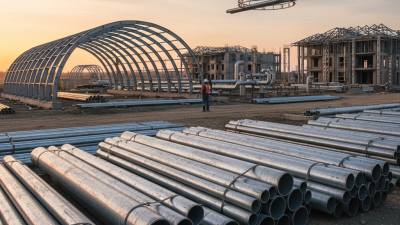
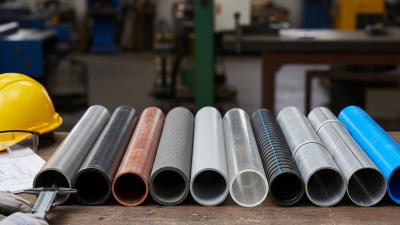
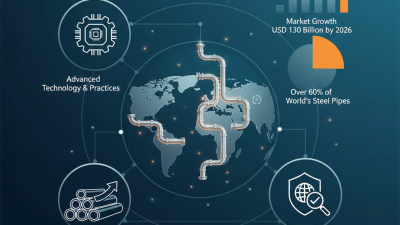
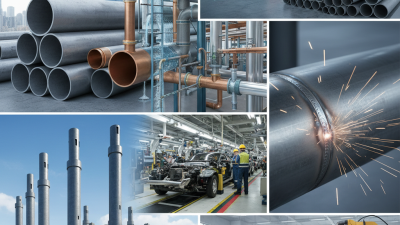
Choosing the right Steel Pipe in 2026 demands more than comparing price, diameter, and delivery time. Global buyers must connect pipe type with pressure, soil, temperature, corrosion, and installation method. A pipe beside a coastal loading dock faces different risks from one buried beneath a dry inland road.
This guide examines seamless, ERW, LSAW, SSAW, galvanized, stainless steel, and structural pipe. Each type has a practical role. Seamless pipe suits demanding pressure service. ERW pipe often offers efficient production for many construction and fluid applications. LSAW and SSAW pipes support large diameters, especially in infrastructure and water projects. Galvanized and stainless options help address corrosion, but neither removes the need for proper design.
Metallurgist Cyril Stanley Smith wrote, “The history of metals is the history of civilization.” His observation remains relevant because steel performance depends on processing, structure, and use. Buyers should therefore review mill certificates, chemical composition, mechanical results, dimensional tolerances, and hydrostatic testing. Standards such as API, ASTM, EN, and ISO can guide decisions, but the purchase specification must match the project.
The categories are useful, not perfect. A low-cost pipe can become expensive after coating repairs, rejected tests, or difficult field welding. Even a premium pipe may fail when selected without soil data or operating details. This 2026 overview helps procurement teams compare options clearly, question supplier claims, and choose Steel Pipe with evidence rather than assumptions.
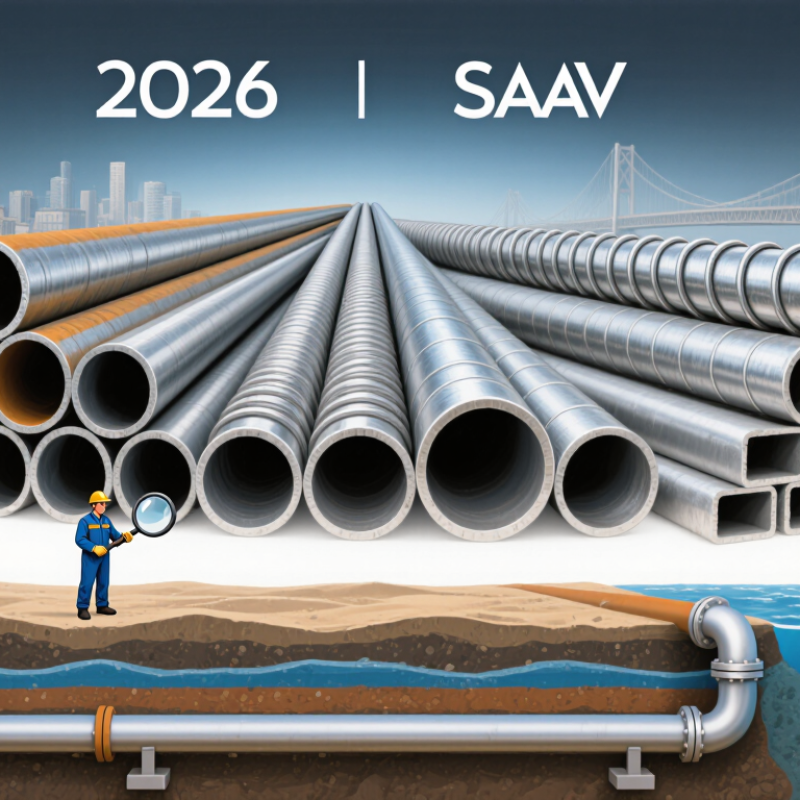
Steel Pipe Basics: Grades, Shapes, Sizes, and Manufacturing Methods
Steel pipe selection starts with four questions: grade, shape, size, and manufacturing method. Grade defines strength, corrosion resistance, and temperature performance. Carbon steel suits many general structural and fluid applications. Alloy steel supports higher heat or pressure demands. Stainless steel performs better in corrosive environments. Always verify chemical composition and mechanical test reports. Do not rely only on a supplier’s label. Traceability matters.
Round pipe remains the common choice for fluid transport. Square and rectangular pipes fit frames, columns, and fabricated structures. Size includes outside diameter, inside diameter, wall thickness, and length. For pipelines, internal diameter and pressure rating deserve close attention. For structural work, outside dimensions and section properties may matter more. Nominal size can confuse buyers. A 100 mm nominal pipe may not measure 100 mm outside. Check the drawing and applicable standard carefully.
Manufacturing also affects performance and cost. Seamless pipe forms from a solid billet and has no longitudinal weld. It is not automatically superior. Welded pipe forms from strip or plate, using processes such as electric resistance welding or spiral welding. Results depend on forming control, weld quality, heat treatment, and inspection. Ask for hydrostatic or nondestructive testing records. Specify tolerances, end finish, coating, and impact requirements. A common mistake is choosing the correct grade but ignoring low-temperature toughness. Recheck service temperature, corrosion exposure, and installation loads before approval. The thickest pipe is not always the safest choice.
Nominal Pipe Size (NPS) is a designation used to identify steel pipe, while the actual outside diameter remains standardized. The examples above are common dimensions referenced in ASME B36.10M for carbon and alloy steel pipe. Wall thickness and weight vary by schedule, manufacturing method, and material grade.
2026 Top Steel Pipe Types for Global Buyers
Seamless steel pipes are formed without a welded joint. They handle high pressure and temperature, making them common in boilers, refineries, and process equipment. Their smooth internal surface supports reliable fluid flow, although higher production costs can affect large projects.
Electric resistance welded pipes are made from rolled steel strip. They suit water lines, structural columns, and low-to-medium pressure services. Longitudinal submerged arc welded pipes offer larger diameters for oil, gas, and municipal pipelines. Spiral submerged arc welded pipes can reduce material waste in specific diameter ranges. They are not interchangeable.
Galvanized pipes carry a zinc coating that helps resist outdoor corrosion. Construction frames, irrigation systems, and service lines often use them. Stainless steel pipes perform better where chemicals, salt, or hygiene requirements matter, including food processing and coastal facilities. A buyer should check wall thickness, pressure ratings, coating quality, weld testing, and applicable standards before ordering. Small details matter. In practice, some teams choose by price alone, then discover that transport damage, poor end protection, or unsuitable corrosion resistance increases the real cost. Pipe selection also depends on temperature, fluid chemistry, installation method, and maintenance access. No selection is perfect. A technically sound purchase still needs traceable mill documents and independent inspection when project risk is high.
| Steel Pipe Type | Typical Manufacturing Process | Common Specifications or Standards | Typical Size Range | Key Characteristics | Typical Industrial Applications |
|---|---|---|---|---|---|
| Carbon Steel Seamless Pipe | Hot piercing and rolling, followed by sizing and heat treatment where required | ASTM A106, ASTM A53 seamless, ASTM A333 for low-temperature service | Approximately DN6 to DN600 (NPS 1/8 to 24) | No longitudinal weld; suitable for elevated temperature, pressure, and demanding cyclic service when correctly specified | Steam lines, process piping, refineries, power plants, boilers, and high-pressure fluid transport |
| Electric Resistance Welded (ERW) Pipe | Steel strip or plate is formed into a tube and welded along the longitudinal seam by electric resistance or induction heating | ASTM A53, ASTM A135, ASTM A252, API 5L for applicable line-pipe grades | Approximately DN15 to DN600 (NPS 1/2 to 24), depending on product and mill capability | Efficient production, consistent dimensions, and generally economical for low- to medium-pressure service | Water distribution, structural columns, fire sprinkler systems, mechanical tubing, and general process piping |
| Longitudinal Submerged Arc Welded (LSAW) Pipe | Wide steel plate is formed into a cylinder and welded longitudinally using submerged arc welding | API 5L, ASTM A671, ASTM A672, and project-specific line-pipe requirements | Approximately DN400 to DN1500 (NPS 16 to 60) | High dimensional control, strong weld integrity, and suitability for large-diameter, high-pressure pipelines | Long-distance oil and gas pipelines, water transmission, penstocks, and heavy industrial process systems |
| Spiral Submerged Arc Welded (SSAW) Pipe | Hot-rolled steel coil is helically formed and joined with submerged arc welding | API 5L, ASTM A252, and applicable water-transmission or structural specifications | Approximately DN500 to DN2500 (NPS 20 to 100) | Cost-effective for large diameters; final suitability depends on weld quality, design pressure, and inspection requirements | Municipal water mains, raw-water intake lines, slurry pipelines, piling, and low- to medium-pressure fluid transport |
| Stainless Steel Seamless Pipe | Cold drawing, hot finishing, or extrusion of stainless steel billet without a welded seam | ASTM A312, ASTM A269, ASTM A213, and EN 10216-5 where applicable | Approximately DN6 to DN600 (NPS 1/8 to 24) | High resistance to oxidation and many corrosive media; alloy selection must match temperature and chemical exposure | Chemical processing, food and beverage plants, pharmaceuticals, heat exchangers, clean utilities, and marine systems |
| Stainless Steel Welded Pipe | Stainless steel strip is roll-formed and longitudinally welded, with optional annealing and pickling | ASTM A312, ASTM A358, ASTM A269, and EN 10217-7 where applicable | Approximately DN6 to DN1200 (NPS 1/8 to 48), depending on construction and specification | Good corrosion resistance and surface finish; weld quality and post-weld treatment are important in critical service | Sanitary piping, architectural structures, water treatment, chemical equipment, and industrial exhaust systems |
| Hot-Dip Galvanized Steel Pipe | Carbon steel pipe is immersed in molten zinc to form a metallurgically bonded zinc coating | ASTM A53 with ASTM A123 or ASTM A153 coating requirements, depending on product configuration | Commonly DN15 to DN300 (NPS 1/2 to 12) | Improved atmospheric corrosion protection; coating performance depends on environment, zinc thickness, and handling | Outdoor water lines, agricultural irrigation, handrails, scaffolding, fencing, and fire protection installations |
| Oil and Gas Casing Pipe | Seamless or welded pipe manufactured, heat-treated, threaded, and coupled for well construction | API 5CT and applicable well-design, grade, connection, and inspection requirements | Commonly approximately DN114 to DN508 (4.5 to 20 inches) | Provides structural support and isolates formations during drilling and production; grade selection addresses collapse and internal pressure | Oil and gas well casing, geothermal wells, underground storage, and selected drilling operations |
| Oil and Gas Tubing | Seamless or welded production tubing, normally supplied with threaded connections and couplings | API 5CT and project-specific requirements for grade, connection, and service conditions | Commonly approximately DN27 to DN114 (1.05 to 4.5 inches) | Conveys produced fluids from the reservoir to the surface; design considers pressure, temperature, corrosion, and flow conditions | Oil and gas production wells, injection wells, geothermal production, and well-service operations |
| Structural Steel Pipe | Seamless, ERW, LSAW, or SSAW manufacturing, selected according to diameter, wall thickness, and loading requirements | ASTM A500, ASTM A252, EN 10219, and other regional structural specifications | Approximately DN25 to DN2500 (NPS 1 to 100) | Designed primarily for axial, bending, and load-bearing performance rather than fluid pressure containment | Building columns, bridge components, pile foundations, stadiums, towers, offshore structures, and machine frames |
| Low-Temperature and Cryogenic Service Pipe | Usually seamless or welded carbon and low-alloy steel pipe with controlled chemistry and impact testing | ASTM A333 and related low-temperature material requirements | Commonly DN15 to DN600 (NPS 1/2 to 24) | Specified for toughness and resistance to brittle fracture at sub-zero temperatures; impact-testing requirements are essential | LNG facilities, refrigerated storage, cold-region pipelines, air-separation plants, and low-temperature process systems |
Note: Size ranges and applications are typical market practices, not limits for every manufacturer. Buyers should confirm material grade, outside diameter, wall thickness, pressure class, temperature range, corrosion conditions, testing, coating, and applicable regional standards before procurement.
When comparing steel pipe types, start with pressure, temperature, and loading conditions. Carbon steel often offers high strength at a competitive cost. For example, ISO 3183 pipeline grades such as X65 specify a minimum yield strength of about 448 MPa. Higher strength can reduce wall thickness, but it may complicate welding and inspection.
Corrosion changes the calculation. The NACE IMPACT study estimated global corrosion costs at approximately US$2.5 trillion annually, equal to 3.4% of global GDP. Galvanized steel suits many outdoor applications, while stainless steel performs better in chloride-rich or hygienic environments. Duplex stainless steel can provide high strength and strong chloride resistance, but its fabrication demands tighter control. Coatings help.
Service life is less predictable. Soil chemistry, water velocity, temperature, coating damage, and maintenance can outweigh laboratory results. The International Zinc Association reports that hot-dip galvanized coatings may last more than 50 years in many atmospheric conditions, yet aggressive industrial exposure can shorten that period sharply. Do not trust one number.
A practical comparison should include yield strength, corrosion allowance, wall thickness, joining method, inspection records, and replacement access. A cheaper pipe may become expensive after repeated shutdowns. My own caution is simple: service-life estimates often look precise, but site data remains incomplete. Buyers should request test certificates, corrosion studies, and documented field performance before approving a global shipment.
In 2026, global buyers will compare ERW, seamless, and LSAW pipes against regional compliance needs, not price alone. World Steel Association data recorded approximately 1.885 billion tonnes of global crude steel production in 2024. That scale increases the need for reliable pipe traceability. Buyers should request heat numbers, chemical analysis, mechanical results, dimensional records, and EN 10204 3.1 inspection documents. Hydrostatic testing and third-party non-destructive testing may also be required.
Standards must match the service. ASTM and API specifications remain common for North American energy projects, while EN standards guide many European purchases. EU orders may require CE conformity under applicable pressure or construction regulations. India commonly requires BIS approval for specified products. Australia often references AS/NZS requirements, while Gulf projects may add GSO rules and client-specific inspection plans. ISO 9001 supports quality control, but it does not prove every pipe meets the purchase specification. A certificate alone can mislead.
Regional customs also affect documentation, marking, and mill approval. Buyers should verify whether the supplier’s certificate covers the exact pipe grade, coating, diameter, wall thickness, and production route. The International Energy Agency continues to report major investment in grids and energy infrastructure, increasing demand for tested steel products (IEA, World Energy Investment 2024). Yet requirements change between projects. The checklist is not flawless. Confirming details with an accredited inspection body before shipment remains practical, especially for large-diameter pipes and pressure service.
2026 Top Steel Pipe Types for Global Buyers
How Buyers Can Select the Right Steel Pipe for Each Project
Global buyers face more than a choice between seamless and welded steel pipe. The service conditions decide the better option. Start with pressure, temperature, fluid chemistry, diameter, and installation method. Seamless pipe suits demanding pressure cycles and critical applications. Electric resistance welded pipe can offer consistent dimensions for many water, structural, and process systems. Spiral welded pipe may reduce cost for large diameters, but its application limits require careful review.
Ask for the applicable material standard, heat number, wall-thickness tolerance, and inspection records. A mill certificate should match the physical pipe, not only the purchase order. For buried lines, examine coating type, soil conditions, cathodic protection, and field-joint treatment. For corrosive fluids, alloy selection matters more than a bright surface finish. Galvanized coating helps in suitable environments, but it is not a universal corrosion solution.
Details often expose weak decisions. Measure sample diameter and wall thickness before installation. Check thread quality, bevel condition, weld appearance, and end protection. Confirm hydrostatic or nondestructive testing requirements in writing. A low quotation may exclude coating, inspection, packaging, or replacement allowances. That can distort the real cost. I have seen tidy comparison sheets miss local temperature swings and lifting damage. The spreadsheet looked complete. It was not. Buyers should also review supplier traceability, production capacity, and realistic delivery dates before approving the pipe schedule.