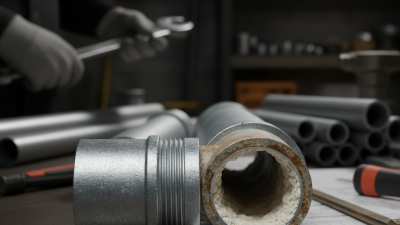
Choosing the right Galvanized Pipe in 2026 requires more than comparing prices or coating appearance. The correct decision depends on service conditions, pipe dimensions, zinc coating quality, connection methods, and supplier documentation. A pipe that looks bright may still be unsuitable for buried soil, high humidity, or demanding water systems.
Mars G. Fontana, a respected corrosion engineering authority, wrote, “Corrosion is the destructive attack of a metal by chemical or electrochemical reaction with its environment.” His statement remains highly relevant to galvanized piping selection. Zinc protects steel through a barrier layer and sacrificial action, but protection is not unlimited. Chlorides, acidic soil, standing water, and contact with dissimilar metals can accelerate damage. Small details matter.
This guide examines practical selection factors for 2026. It considers standards, pressure ratings, nominal size, wall thickness, zinc coating, threading, welding limitations, and inspection records. Buyers should request mill certificates, coating information, and test results from qualified suppliers. Experience also matters. A pipe installed outdoors may face different risks from one used inside a dry mechanical room. That distinction is easy to miss.
There is no universal “best” Galvanized Pipe. The cheapest option may become expensive after premature replacement. Still, specifications can be overcomplicated, and product labels are not always perfectly clear. A careful review is necessary. Compare the actual operating environment, not just the catalog image. Reliable choices come from verified data, experienced engineering judgment, and honest consideration of uncertainty.
How to Choose Galvanized Pipe in 2026?
Define galvanized pipe types, coatings, and manufacturing standards before comparing prices. Welded pipe suits many water, structural, and general service applications. Seamless pipe offers uniform strength where pressure and demanding conditions require closer control. Pre-galvanized pipe is formed from zinc-coated steel sheet. Its cut edges may need additional protection. Hot-dip galvanized pipe receives a zinc coating after fabrication, creating stronger coverage around welds and fittings.
Coating thickness matters, but thicker is not always better. Check the specified zinc mass, coating class, and test method. Hot-dip coatings commonly follow ISO 1461 or equivalent national requirements. Pipe dimensions and mechanical properties may follow standards such as ASTM A53 or EN specifications. Confirm the exact edition with the project engineer. Standards can differ by region and end use.
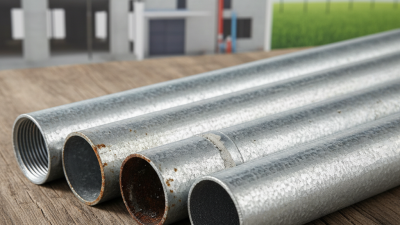
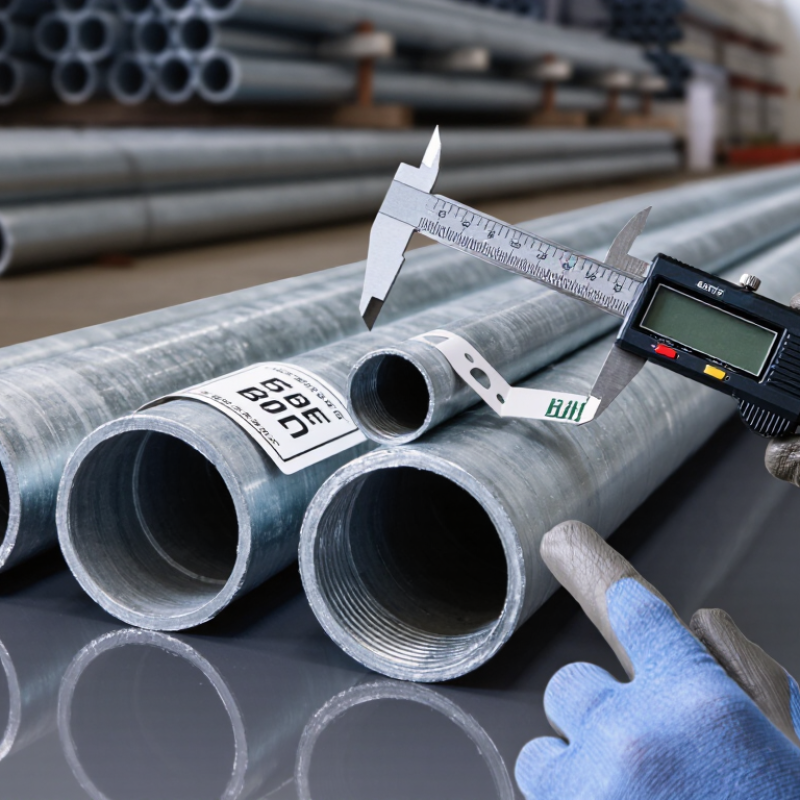
Inspect more than a bright surface. Look for coating continuity, bare spots, excessive lumps, blocked ends, and visible weld defects. Measure coating thickness at several locations, not only one convenient point. Request mill certificates, heat numbers, galvanizing records, and inspection results. Threaded ends deserve extra attention because cutting can expose steel. A compatible repair coating may be required, but field repairs are often underestimated. I have found that a cheaper pipe becomes expensive after poor documentation delays installation. Some assumptions still fail. Verify transport damage, storage conditions, and the actual service environment before approval.
How to Choose Galvanized Pipe in 2026?
Choosing galvanized pipe starts with the project, not the price tag. Match the nominal pipe size to the required flow rate and connection design. Remember, nominal size is not the same as measured outside diameter. A pipe that looks adequate may restrict water flow after elbows, valves, and fittings are added.
Schedule controls wall thickness. Schedule 40 often suits moderate-duty applications, while Schedule 80 provides greater pressure and impact resistance. However, thicker walls can reduce internal flow space and increase weight. Check pressure, temperature, span, and local construction requirements before selecting a schedule. Material also matters. Galvanized carbon steel offers useful corrosion protection in many outdoor and utility settings, but damaged coatings can expose bare steel. For drinking-water systems, confirm current health standards and water chemistry. The right choice may differ between a dry indoor line and a humid coastal installation.
Tips: Measure the existing fittings carefully. Inspect threads for coating buildup. Ask for coating thickness records and pressure-test documentation. Do not assume every galvanized pipe performs equally. I would also review compatibility with copper, brass, and other metals, because contact can accelerate corrosion. This detail is easy to overlook. Recheck the calculation when the pipe runs underground, carries hot water, or faces repeated vibration. Even experienced installers can miss one condition.
| Nominal Pipe Size | DN (Approx.) |
Outside Diameter (in / mm) |
Schedule 40 Wall (in / mm) |
Schedule 80 Wall (in / mm) |
Recommended Project Use | Typical Material and Coating | Selection Considerations |
|---|---|---|---|---|---|---|---|
| 1/2 in | DN15 | 0.840 / 21.3 | 0.109 / 2.77 | 0.147 / 3.73 | Small water branches, instrument lines, and light-duty utility piping | Carbon steel pipe with hot-dip zinc coating | Check minimum flow, threading requirements, and pressure rating before use. |
| 3/4 in | DN20 | 1.050 / 26.7 | 0.113 / 2.87 | 0.154 / 3.91 | Branch connections, small building services, and general utilities | Carbon steel pipe, hot-dip galvanized after manufacture where specified | Schedule 80 provides greater wall thickness but reduces internal flow area. |
| 1 in | DN25 | 1.315 / 33.4 | 0.133 / 3.38 | 0.179 / 4.55 | Residential and commercial water distribution, air, and utility piping | ASTM A53 carbon steel with zinc coating suitable for the service environment | Confirm that galvanized steel is permitted for the intended potable-water application. |
| 1-1/4 in | DN32 | 1.660 / 42.2 | 0.140 / 3.56 | 0.191 / 4.85 | Medium-size water, compressed-air, and mechanical-service lines | Galvanized carbon steel; threaded or grooved connections may be used as designed | Account for fittings, valves, support spacing, and thermal movement. |
| 1-1/2 in | DN40 | 1.900 / 48.3 | 0.145 / 3.68 | 0.200 / 5.08 | Building risers, irrigation branches, and general mechanical services | Hot-dip galvanized carbon steel for above-ground or moderately corrosive service | Use hydraulic calculations rather than nominal size alone to determine capacity. |
| 2 in | DN50 | 2.375 / 60.3 | 0.154 / 3.91 | 0.218 / 5.54 | Main building branches, irrigation, fire-protection-related services where approved | ASTM A53 galvanized carbon steel; use fire-system-listed products where required | Schedule, joining method, and certification must match the governing code. |
| 2-1/2 in | DN65 | 2.875 / 73.0 | 0.203 / 5.16 | 0.276 / 7.01 | Larger distribution mains, utility headers, and industrial services | Galvanized carbon steel with coating thickness selected for exposure conditions | Evaluate weight, transport, support loads, and field cutting or repair of the coating. |
| 3 in | DN80 | 3.500 / 88.9 | 0.216 / 5.49 | 0.300 / 7.62 | Commercial mains, process utilities, and outdoor service piping | Hot-dip galvanized carbon steel; consider heavier coating for outdoor exposure | Check external corrosion, buried-service requirements, and insulation compatibility. |
| 4 in | DN100 | 4.500 / 114.3 | 0.237 / 6.02 | 0.337 / 8.56 | Large water mains, industrial utilities, and mechanical plant distribution | Galvanized carbon steel conforming to the specified pipe and coating standards | Use engineering calculations for pressure, surge, flow velocity, and support design. |
| 6 in | DN150 | 6.625 / 168.3 | 0.280 / 7.11 | 0.432 / 10.97 | Industrial mains, large utility headers, and high-capacity distribution | Heavy galvanized carbon steel where corrosion protection and structural strength are required | Confirm handling equipment, flange or grooved-joint compatibility, and code approval. |
| Technical notes: Nominal sizes, outside diameters, and wall thicknesses are based on commonly used dimensions in ASME B36.10M for carbon-steel pipe. Schedule 40 and Schedule 80 are nominal wall classifications, not direct pressure ratings. Actual allowable pressure depends on material grade, temperature, joint efficiency, corrosion allowance, manufacturing method, and the applicable design code. For galvanized coating requirements, specify the applicable coating standard and verify whether hot-dip galvanizing is suitable for potable water, buried service, high-temperature service, or chemically aggressive environments. | |||||||
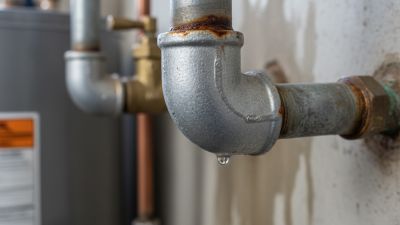
Corrosion resistance depends on the zinc coating, steel condition, and service environment. Hot-dip galvanized pipe usually provides a more uniform protective layer than basic surface treatments. However, coating thickness matters more than appearance. Inspect for bare spots, deep scratches, peeling, and uneven edges. Chloride-rich air, acidic soil, fertilizer, and trapped moisture can shorten service life. I have seen bright pipe fail early when water collected inside poorly drained sections. That detail is easy to miss.
Strength must match pressure, span, temperature, and installation loads. Check the pipe’s outside diameter, wall thickness, connection method, and rated pressure. Threading removes some protective coating, so exposed areas need suitable repair protection. For buried systems, confirm soil chemistry and drainage before selecting the pipe. For outdoor systems, allow for thermal movement and prevent direct contact with incompatible metals. A strong pipe is not automatically the right pipe. Local construction codes and current testing requirements should guide the final choice.
Tips: Request coating-thickness records and material certificates. Compare expected service conditions with published corrosion data. Examine cut ends before installation. Avoid relying on color alone. If the environment is unusually wet or salty, obtain advice from a qualified corrosion engineer. I would also budget for inspection, because maintenance assumptions are often optimistic.
How to Choose Galvanized Pipe in 2026?
Compare Standards, Certifications, Costs, and Supplier Reliability
In 2026, galvanized pipe should match its service conditions, not just its quoted price. Start with pressure, temperature, diameter, and water chemistry. For structural work, compare applicable ASTM or EN requirements. For hot-dip coating quality, check whether production follows ISO 1461 or an equivalent specification. Standards are not interchangeable automatically. Confirm wall thickness, zinc coating mass, thread dimensions, and allowable tolerances on the purchase document.
Certification needs careful reading. Request mill test certificates, coating inspection records, and batch traceability. A certificate without a heat number is weak evidence. Independent testing can verify coating thickness at several points, especially around welds and fittings. I have seen attractive samples fail because the delivered pipe belonged to a different production batch. That mistake was preventable. Yet testing every length may exceed the project budget, so define inspection levels before ordering.
Price comparison should include cutting, threading, freight, storage, replacement risk, and delivery delays. The cheapest quotation can become expensive after rust spots appear during outdoor storage. Evaluate suppliers through factory records, production capacity, response times, and corrective-action history. Ask for recent project references and a sample inspection plan. Visit the facility when the order is critical. Communication matters. A reliable supplier reports production changes early, though even experienced buyers sometimes overlook packaging quality. Keep pipes dry, separated from standing water, and protected from trapped moisture during transport.
Choosing galvanized pipe in 2026 starts with verified specifications, not a low purchase price. Confirm the outside diameter, wall thickness, pressure rating, and intended fluid. Match the pipe to the applicable local standard. Ask for coating thickness records, material certificates, and batch traceability. These documents help prove what arrived on site. They also expose vague claims.
Inspect every bundle before installation. Look for continuous zinc coverage, clean threads, straight lengths, and protected ends. Small bare spots can become larger corrosion points after handling. A rubber mallet may prevent thread damage during inspection. Do not accept deep dents or heavy white rust without technical review. I once overlooked damaged end protection, and later cutting created more rework than expected. That mistake still influences my inspection checklist.
Plan the installation around real site conditions. Measure routes, allow space for fittings, and locate supports before unloading pipe. Keep galvanized surfaces away from direct contact with incompatible metals when required by the project specification. Protect cut edges with a suitable repair method. Provide drainage where trapped water could remain, especially in outdoor runs. Clean the system before commissioning, then check joints under controlled pressure. Leave room for expansion and future maintenance. A rushed layout often looks efficient, but it can make repairs difficult. Recheck the plan.